Archive
This is where the publication becomes a record: every published story stays searchable, filterable and editorially legible.
Search stories
From the archive
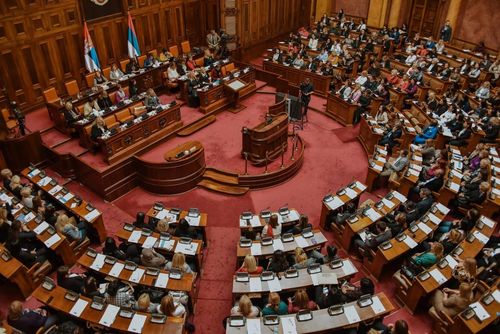
Women on the Ballot, Men at the Top: What Is Electoral Equality Worth?
In Serbia's parliamentary elections scheduled for 25 October 2026, political parties are once again highlighting the number of women among their candidates. Some take particular pride in the fact that women make up a majority on their lists. This is certainly worth noting, but it leaves open the question of how much influence female candidates have over party decisions and what power they will hold if elected. An OSCE report on gender equality in Serbia's National Assembly shows why this distinction cannot be reduced to an electoral percentage.
Ahead of the BNC Elections: Democracy and Pluralism Before Unity, Authority, Parties and Projects
Ahead of the elections for the Bosniak National Council, Emir Bihorac examines the approaches of Bosniak political parties and proposes a different model: a non-partisan, secular and pluralistic Council that preserves Sandžak's heritage and protects the interests of all Bosniaks.
Results: 39

The White Coat and “Animal Farm”: Who Cares for Those Who Care for Us?
Doctors spend every day asking others how they are, while their own exhaustion, illness and emotional burden often remain unspoken. Through personal experience and Orwell’s Boxer, the article asks how long self-sacrifice can be treated as a professional virtue before it becomes a burden for the person inside the white coat.
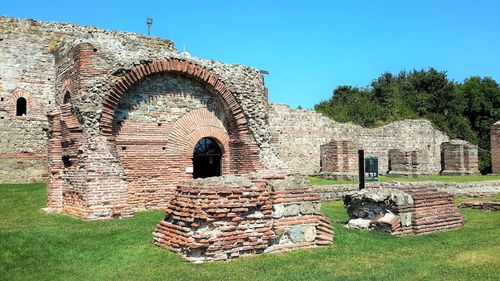
Climate Is Eroding History: How to Protect Serbia’s Cultural Heritage
From temperature fluctuations and flash floods to droughts and changing humidity, climate extremes are increasingly damaging monuments, archaeological sites and historic areas across Serbia. Protecting heritage therefore depends on data, local monitoring, new technologies and institutions capable of acting before damage becomes irreversible.
How Delusions Are Created: From “Srećni ljudi” to Moral Shortcuts
How confusing correlation with causation, from the moralization of poverty to judgments about character, guilt and responsibility, can produce stereotypes that over time become part of collective social thinking.

Why Bosniak Parties Are Unlikely to Decide Who Forms Serbia’s Next Government
From estimates of the Bosniak electorate and possible parliamentary seats to the political myth of the “decisive vote”: Emir Bihorac examines how much influence Bosniak parties can realistically have on the formation of Serbia’s next government.
Stay Quiet, It Has Always Been This Way: How the Exploitation of Young Doctors Became the Rule
Medicine is still presented to young people as a calling, while the system expects them to stay quiet, work without security and wait for dignity as if it were a reward.
Everything passes, only self-interest is eternal: a critique of depoliticization
A critique of a society in which political positions are declared dangerous, depoliticization is presented as a virtue, and personal interest becomes the most enduring form of political power.
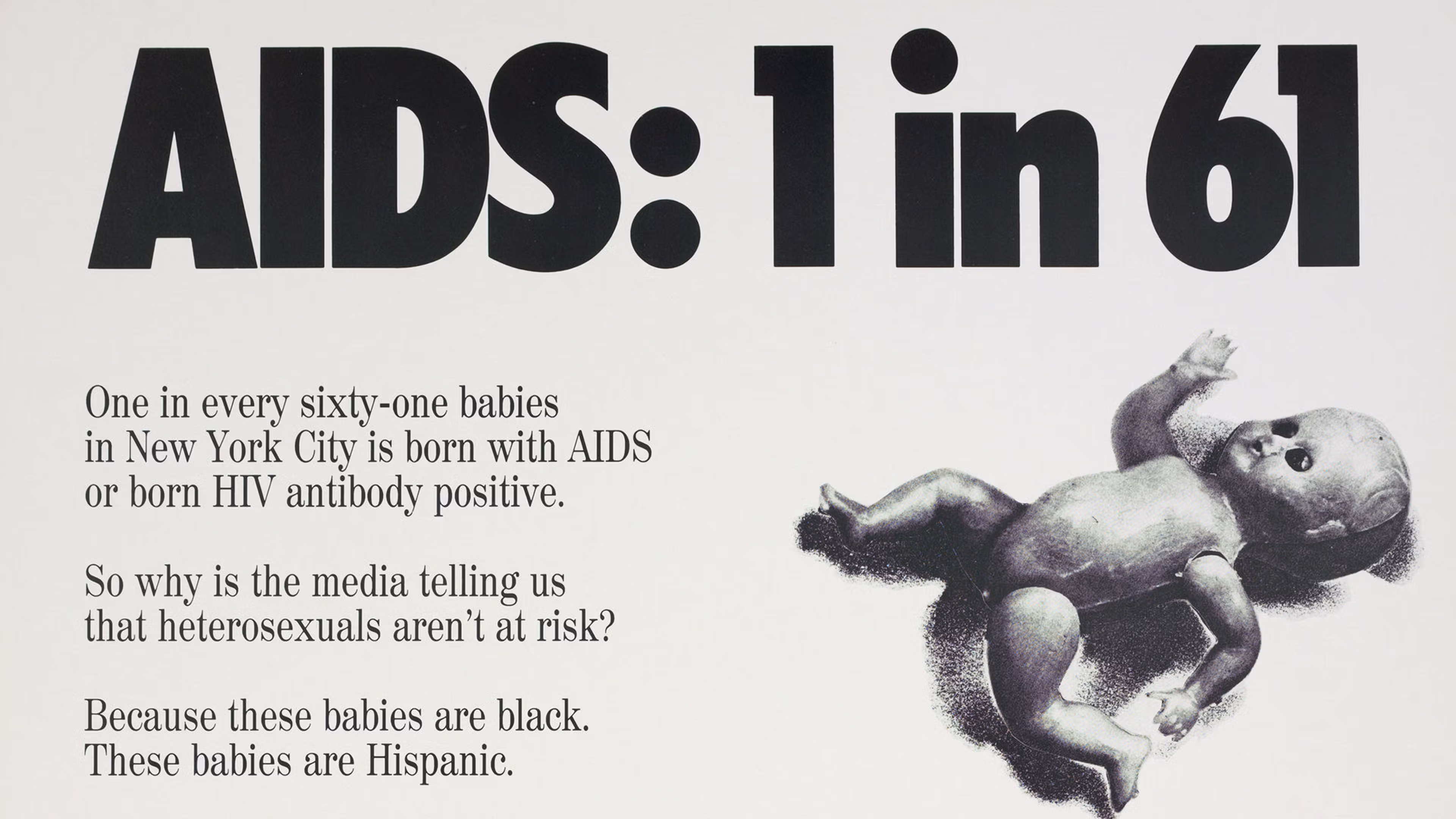
From the Bloody Hand to the Museum Wall: How Protest Produces Art
From Serbia to Paris, Chile and New York, protest movements create images that outlive the moment of revolt. Later comes the struggle over their meaning, memory and ownership.

When the State Moves Behind a Screen
Digitalisation can make life easier, but when apps, passwords and internet access become unspoken conditions for exercising rights, some citizens are left dependent on others.
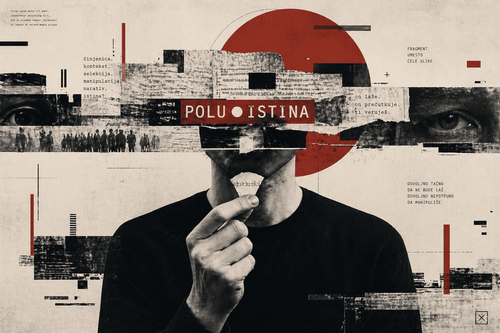
Half-truth as the new norm
Why lies are no longer necessary. How to speak with just enough truth to avoid lying, yet enough omission to manipulate.
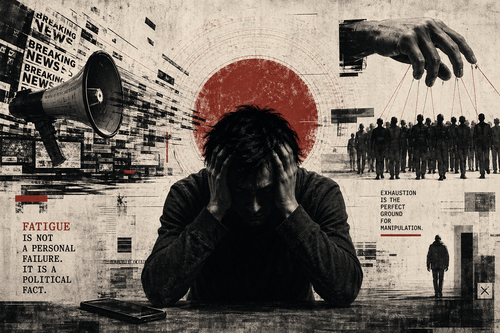
Fatigue as a political fact
People are not apathetic because they “don’t care,” but because they are exhausted. Fatigue as the ideal ground for manipulation.
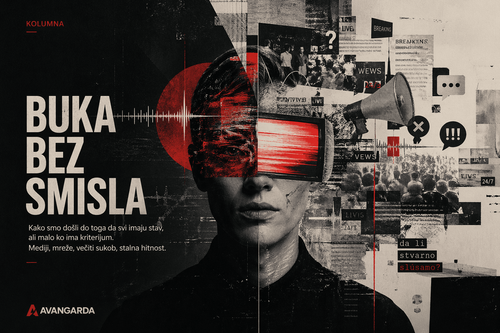
Noise without meaning
How did we get to a point where everyone has an opinion, but few have any criteria? Media, networks, an endless conflict, a constant sense of urgency.