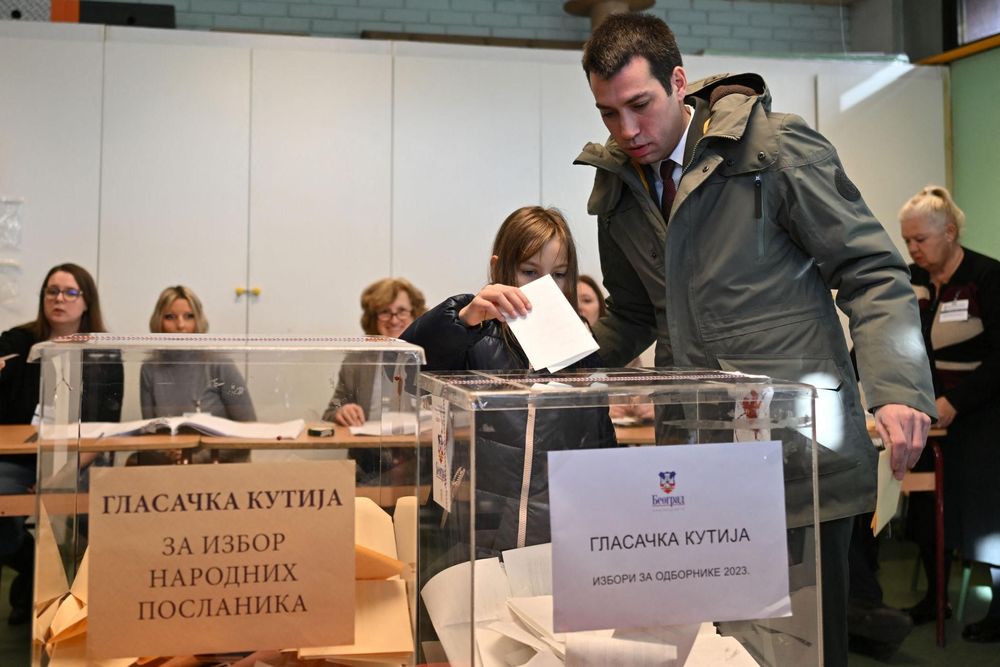
From estimates of the Bosniak electorate and possible parliamentary seats to the political myth of the “decisive vote”: Emir Bihorac examines how much influence Bosniak parties can realistically have on the formation of Serbia’s next government.
Among Bosniaks in Sandžak, as well as among the wider public in Serbia, a narrative has recently been gaining ground that Bosniak votes, or more precisely Bosniak political parties, will decide who forms the government after the next parliamentary elections in Serbia. To a significant extent, this narrative is promoted by the Sandžak Democratic Party (SDP) and the Party of Democratic Action of Sandžak (SDA Sandžaka), while it is also echoed by parts of the public elsewhere in Serbia. It is increasingly accepted without much critical scrutiny or serious analysis.
The narrative rests on several incorrectly formulated, or perhaps more accurately misused, facts about political life in Serbia. The first is the polarization of Serbian society and the assumption that the next election will essentially amount to a choice between the Serbian Progressive Party (SNS) and its partners on one side, and the Student List, a political movement that emerged from protests organized by students in Serbia, on the other. From this, the conclusion is drawn that Bosniak votes, and therefore Bosniak parties, will tip the balance.
The narrative also relies on the idea that Bosniaks in Serbia have not yet firmly aligned themselves politically and that they will ultimately decide whether the government is formed by the SNS or the Student List.
It should also be noted that this argument draws on more recent political history, when Bosniak votes and/or Bosniak parties were, according to certain interpretations, decisive in election outcomes. The example most often cited is the 2008 presidential election in Serbia, when Boris Tadić won a second term as president. In this interpretation, the influence of Bosniak votes, and particularly votes from Sandžak, is overstated, with some going so far as to argue that Bosniak support was decisive.
Finally, the narrative that Bosniaks decide elections in Serbia is also based on a political concept more than 25 years old: the assumption that minority political parties carry a distinct ideology fundamentally different from that of majority parties. These political opinions are then treated almost as postulates or axioms in order to sustain the broader narrative.
The purpose of this article is to explain why these political assumptions are based either on a misunderstanding of statistics and mathematics or on an inaccurate interpretation of election results and political processes. The narrative itself, I argue, is built on incorrect conclusions and creates a distorted picture both among Bosniaks and among the wider public in Serbia.
The starting point must be the basic statistics: the number of Bosniaks living in Serbia, the number registered in the special electoral roll of the Bosniak national minority, and at least an approximate estimate of how many Bosniaks actually vote in parliamentary elections.
According to the most recent census, 153,801 people in Serbia identified as Bosniaks, while according to data from the beginning of this year, 114,500 people were registered in the special electoral roll of the Bosniak national minority. The number is not identical to the total number of eligible Bosniak voters because registration in the special electoral roll is voluntary, meaning that the actual number of Bosniaks eligible to vote in Serbia is probably higher.
Determining how many Bosniaks actually vote in parliamentary elections is considerably more difficult. On several occasions, Bosniak voters have been encouraged to support other electoral lists, while Bosniak parties themselves have entered coalitions with parties operating across Serbia.
An approximate upper estimate for the number of Bosniaks who might vote in the next parliamentary election can be derived by looking at how many votes Bosniak parties received in the most recent local elections across Sandžak municipalities.
In Novi Pazar, the figure was approximately 39,000 votes; in Tutin, slightly more than 14,000; in Sjenica, close to 11,000; in Prijepolje, almost 9,000; in Priboj, close to 3,000; and in Nova Varoš, more than 500.
This produces a total of roughly 76,500 votes cast for Bosniak parties in local elections across Sandžak municipalities in Serbia. That is equivalent to almost 67 percent of the Bosniaks registered in the special electoral roll.
However, this is clearly a high estimate. Some voters who are not Bosniaks also voted for Bosniak lists, particularly the SDP. In addition, these figures come from local elections, which traditionally generate greater interest because voters are choosing local governments that have a more immediate impact on everyday life in Sandžak.
For that reason, I will use 76,500 as an approximate upper limit for parliamentary elections.
The lower limit can be placed at around 50 percent of those registered in the special electoral roll, because turnout in Sandžak during parliamentary elections has traditionally hovered around that level. That figure would amount to slightly more than 57,000 people.
Removing the extreme values around the upper and lower boundaries gives us a range of approximately 63,000 to 70,500 Bosniaks who could participate in parliamentary elections in Serbia.
The mathematical midpoint is close to 67,000, more precisely 66,750. For the purposes of this analysis, I will call this the projected number of Bosniak voters in the next parliamentary election.
It is important to emphasize that this is a generous rather than conservative estimate. Both the lower and upper boundaries have been set relatively high.
A projected figure of 67,000 therefore assumes high Bosniak turnout and represents the best-case scenario for Bosniak political parties. It is highly unlikely that the number of Bosniaks participating in elections for the National Assembly would be significantly higher.
This projection is also supported by the fact that a large number of Bosniaks are temporarily working abroad, as well as by declining interest in elections of various kinds and the growing political apathy among parts of the electorate.
The next question is how many parliamentary seats a united Bosniak list might win in the next parliamentary election, based on previous election results, assuming that it captures the entire projected Bosniak vote and that overall turnout remains relatively low. Again, this is a best-case scenario for Bosniak parties.
Turnout in the 2023 parliamentary election was almost 59 percent. Two Bosniak lists, SDA Sandžaka and the Justice and Reconciliation Party (SPP), each won two seats.
SDA received almost 22,000 votes, while the SPP, running in coalition with the Democratic Alliance of Croats in Vojvodina, received around 29,000.
Had they run together, taking into account the rules governing minority lists and legal changes that increase minority-list vote totals by five percent for seat allocation purposes, such a list might have had a chance of winning around five seats.
However, the Croatian vote from Vojvodina also has to be taken into account. Without those votes, SDA and SPP together would realistically have had around 45,000 votes, which would probably have produced four rather than five seats.
In other words, the overall situation would not have changed significantly.
Had a united Bosniak list comprising SDP, SDA and SPP contested the previous parliamentary election and managed to capture the entire projected figure of 67,000 votes, it could theoretically have won as many as seven seats.
Over the last five election cycles, overall turnout in Serbia has ranged between 49 and 59 percent. The student movement and the expected participation of a Student List in the next election, however, are likely to increase turnout.
A significant number of citizens who were previously politically inactive or apathetic have become engaged, and some forecasts expect turnout to rise by as much as ten percentage points. Some estimates even suggest turnout could exceed 70 percent.
For the purposes of this analysis, I will project turnout at between 59 and 69 percent, with a midpoint of 64 percent. I will refer to this as the projected turnout in Serbia’s next parliamentary election.
Once again, this estimate is relatively restrained, since both the upper and lower values used here remain comparatively modest.
With projected turnout of 64 percent, and under the best-case assumption that a united Bosniak list captures all 67,000 projected Bosniak votes, that list would win approximately five seats.
To win a sixth seat at this level of turnout, a united Bosniak list would probably need at least 72,000 to 75,000 votes, which appears difficult to achieve.
The conclusion of this part of the analysis is therefore straightforward: even in its best possible scenario, a united Bosniak list can realistically expect no more than five seats in the National Assembly of Serbia.
That figure will serve as the upper boundary for Bosniak parliamentary representation in this analysis, and it already begins to challenge the central claim that Bosniak parties will decide who forms Serbia’s next government.
Serbia’s political landscape is polarized, and there are two dominant political blocs. But these are not the only political forces, nor is Serbia currently in a state of extreme polarization in which two opposing blocs each stand close to 50 percent.
There are several additional political groups polling at several percentage points and potentially above the three-percent electoral threshold.
Based on the previous behavior of political parties from Sandžak, a united Bosniak list would most likely support an SNS-led government if the SNS were able to assemble a majority.
Historically, at least two of the three major Bosniak parties have frequently participated in Serbian governments, joining rather than opposing the political majority.
If, on the other hand, the Student List formed a government together with other parties, a united Bosniak list would probably support that parliamentary majority as well.
In either case, Bosniak parties would more likely join an existing majority than create one themselves.
A significant part of the narrative described at the beginning of this article is rooted in questionable conclusions drawn during the first decade of the 2000s.
One particularly influential example was a report by the Helsinki Committee for Human Rights on the state of human rights and democracy, which argued that Bosniak votes from Sandžak had contributed decisively to Boris Tadić’s victory in the second round of the 2008 presidential election.
Tadić defeated Tomislav Nikolić by approximately 107,000 votes. In Novi Pazar, Tutin and Sjenica, Tadić had an advantage of around 57,000 votes.
From this, some concluded that without Bosniak support from these municipalities, Tadić could not have defeated Nikolić.
The problem with that interpretation is that national turnout increased from approximately 61 to 68 percent between the first and second rounds, and nominal percentage changes are confused with changes in absolute numbers.
Tadić did indeed achieve his largest percentage increases in Novi Pazar, Tutin and Sjenica between the first and second rounds.
In Novi Pazar, for example, his support increased from roughly 40 percent to around 81 percent.
But percentage growth and absolute numerical growth are not the same thing.
Novi Pazar, Tutin and Sjenica had the largest proportional increase, but they did not produce the largest increase in the number of votes.
Belgrade and the Autonomous Province of Vojvodina produced considerably larger absolute gains.
In Belgrade, Tadić increased his vote total by almost 81,000. In Vojvodina, the increase was approximately 155,000.
Together, Belgrade and Vojvodina therefore produced an additional advantage of approximately 236,000 votes for Tadić.
That is the significant absolute increase.
The percentage increase in Belgrade and Vojvodina was much smaller, but the authors of the Helsinki Committee report either failed to distinguish adequately between percentage and absolute growth or did not apply that distinction consistently.
As a result, the 57,000-vote advantage from Sandžak was effectively treated as a conditio sine qua non, a necessary condition without which Tadić supposedly could not have won.
Yet the 236,000-vote increase in Belgrade and Vojvodina was much larger.
Against an overall victory margin of around 107,000 votes, the decisive numerical shift was therefore concentrated in Belgrade and Vojvodina rather than solely in Sandžak.
If election results outside Belgrade and Vojvodina were considered separately, Nikolić would have won.
Put more simply: without the additional Tadić advantage in Belgrade and Vojvodina, Nikolić would have won even with strong support for Tadić in Sandžak.
Even if Sandžak had voted overwhelmingly for Tadić, the absence of the increased support from either Belgrade or Vojvodina would still have changed the national result.
The argument that Bosniak votes alone delivered victory to Tadić was challenged even more clearly in the 2012 presidential election, when lower turnout in Belgrade and Vojvodina helped Nikolić defeat Tadić in the second round.
These were precisely the regions in which Tadić had enjoyed particularly strong support.
Lower turnout there reduced his advantage and contributed to Nikolić’s victory.
Belgrade is especially important in this context. Nikolić narrowly defeated Tadić there by almost 16,000 votes.
This matters because Serbia is a highly centralized country with a capital in which a disproportionate share of the population lives or works.
Political power, like economic and institutional power, is therefore strongly concentrated around the center.
Where one urban center is disproportionately large relative to the rest of the country, that centripetal force is reflected in political life as well, and the regions with the greatest population and political weight inevitably carry enormous electoral importance.
Much of this was neglected in public commentary after the elections.
Analysts instead searched for a convenient explanation and, once again by confusing nominal and absolute values, turned to invalid ballots, of which there were almost 100,000 in the second round of the 2012 election.
Nikolić won by approximately 70,000 votes, and invalid ballots were consequently “accused” of determining the outcome.
Those analyses often neglected the fact that turnout had fallen considerably in the second round.
It was argued that turnout had declined across all regions, which is true as a percentage measure, but the analysis failed to account for the fact that reduced participation in Belgrade and Vojvodina had a greater numerical impact precisely because those were areas where Tadić had previously enjoyed stronger support.
Once again, the debate drifted into speculation.
Understanding statistics and mathematics is therefore essential in political analysis.
Without it, analysis easily turns into political agitation or speculation, which in turn produces political myths.
What the numbers demonstrate far more convincingly is not that Bosniaks or Bosniak parties decide Serbian elections, but that many political interpretations have failed to distinguish between percentage changes and absolute vote totals.
The historical record also shows that Bosniak parties, like many other minority parties, have generally sought participation in government rather than functioning as autonomous kingmakers.
This undermines the central historical argument that Bosniaks have previously determined national election outcomes and brings us back to the question of the next parliamentary election and a possible united Bosniak list.
We therefore return to the projected figure of 67,000 Bosniak voters and projected overall turnout of 64 percent.
Having already examined the most favorable scenario, we can now consider several alternatives.
The first scenario assumes that a united Bosniak list would compete for Bosniak votes against other political groups.
These would include the SNS, the Student List and the pro-European opposition, which has traditionally attracted a portion of the Bosniak vote in Sandžak.
Attitudes toward the SNS have also changed in Sandžak. The party was once viewed primarily as a party supported by Serb voters, but it is now reasonable to assume that a smaller number of Bosniaks may vote directly for it.
The number would probably remain limited, but it would exist.
For the purposes of this projection, I will set support for the SNS among projected Bosniak voters at between two and eight percent, with a midpoint of four percent.
Four percent of 67,000 is 2,680 votes.
Support for the pro-European opposition could range between four and eight percent, with a midpoint of six percent, or approximately 4,020 votes.
Support for the Student List among Bosniak voters could be higher, ranging between five and 15 percent, with a midpoint of approximately ten percent, or 6,700 votes.
Subtracting these votes from the projected total of 67,000 leaves approximately 53,600 votes for a united Bosniak list.
That number would likely translate into approximately four to five parliamentary seats.
This remains a relatively favorable scenario because the projection does not account for additional vote losses to smaller lists, invalid ballots, abstention or other factors.
All three Bosniak parties are strongly opposed to one another, and a joint electoral list could alienate voters of all three parties.
This could be especially true among SPP voters, many of whom hold strongly negative attitudes toward both SDP and SDA.
For the lower estimate of support loss caused by a joint list, I will use five percent, and for the upper estimate 15 percent.
A midpoint of ten percent would amount to 6,700 votes.
After accounting for that loss, a united Bosniak list would have approximately 46,900 votes.
That would likely produce three to four members of parliament.
Under this scenario, all three parties would lose part of their support, making it relatively unfavorable to each of them.
The forthcoming elections for the Bosniak National Council also complicate the possibility of a united parliamentary list.
The three parties would have to persuade voters to support three separate lists in elections for the National Council while simultaneously asking them to unite behind a common list in parliamentary elections.
The National Council elections therefore make political unification more difficult, particularly because all three parties have strong incentives to preserve their separate identities and competing political narratives.
Even in a relatively successful scenario in which a united list wins four seats in the Serbian parliament, those four seats represent only 1.6 percent of the total membership of the National Assembly.
Four seats are therefore unlikely on their own to determine who forms the next government.
Serbia is currently polarized, but it is not necessarily in a situation of extreme polarization in which one to five seats automatically decide who can form a majority.
Two dominant blocs might each win roughly 100 to 110 seats, depending on turnout and electoral distribution.
The decisive votes required to reach the 126-seat majority would more likely come from larger political groups that cross the three-percent threshold.
These could include the Socialist Party of Serbia (SPS), parts of the pro-European opposition, or right-wing and conservative opposition lists, each potentially controlling seven to 15 seats depending on their level of support.
A united Bosniak list, which in itself would be politically difficult to establish, would probably use its four seats to support an SNS-led majority.
Alternatively, such unity might collapse along existing political lines, with SDP and SPP supporting the SNS while SDA aligned itself more closely with the Student List.
There is also a practical question: how would only four parliamentary seats be divided among three parties?
That issue alone makes a united Bosniak list considerably more difficult to achieve.
The more realistic scenario is therefore that all three parties contest the parliamentary election separately.
Given the upcoming Bosniak National Council elections and the political dynamics between the parties, a united list remains difficult to imagine and could even prove counterproductive.
The SPP arguably has the most to lose from such an arrangement because it has built much of its political identity around sharp criticism of the SDP-SDA political establishment.
SDP and SDA voters may be more accustomed to following decisions made by their party leaderships, although the motivations and degree of discipline differ between the parties.
SDA has historically maintained a comparatively disciplined electorate closely associated with the long-standing political leadership of Sulejman Ugljanin.
SDP support, by contrast, is often interpreted as being shaped not only by political identification but also by interest-based networks and the party’s participation in local institutions.
A significant portion of the SDP electorate includes voters and family members employed in public institutions such as schools and local or national administrative bodies, while part of its support also comes from the private sector and from businesses that maintain various relationships with political structures close to the party.
These are political assessments rather than precise measurements of individual voter motivation, but they remain relevant when considering how electoral alliances could affect party support.
The leaderships of SDP and SDA may therefore view a united list favorably.
However, if the SPP were excluded, an SDP-SDA list could create difficulties for both parties by making their willingness to cooperate more visible to voters who are accustomed to seeing them as rivals.
SDA appears particularly vulnerable if it contests parliamentary elections independently, because its electorate may be more open than that of SDP or SPP to supporting alternative lists.
The most likely scenario is therefore that all three parties will run separately in the next parliamentary election.
Using the projected total of 67,000 Bosniak votes and comparing previous parliamentary elections with local election results in Sandžak, it becomes clear that both SPP and SDA have historically performed better in parliamentary elections than in local contests.
It is reasonable to assume that some SDP voters in local elections support SPP or SDA at parliamentary elections, while others vote for the pro-European opposition, a smaller number for the SNS, and some abstain.
SDP, if running independently, would probably win the largest number of votes, followed by SPP and then SDA.
By combining data from previous Bosniak National Council elections, local elections in Sandžak and the most recent parliamentary election, the projected figure of 67,000 Bosniak voters can be divided among the three main parties.
SDP is the most difficult to estimate because it has not previously contested parliamentary elections independently.
The lower estimate would be around 16,000 votes, approximately the number won by SDP in the Bosniak National Council election.
The upper estimate is more difficult to determine, but I would place it at approximately 34,000 votes, taking into account the possibility that SDP could also attract some SDPS voters from elsewhere in Serbia.
That would, however, complicate its legitimacy as an exclusively Bosniak political list and would also be difficult to achieve if its campaign remained primarily focused on Sandžak and national identity narratives.
The midpoint estimate for SDP would therefore be approximately 25,000 votes.
At projected national turnout of 64 percent, this would probably produce two parliamentary seats.
A third seat would likely require more than 33,000 votes.
This is a favorable scenario in which SDP does not lose a significant number of voters to the SNS, Student List or pro-European opposition.
Given the relative discipline of its electorate, two seats remain a plausible outcome.
If support fell below approximately 22,000 votes, the list would probably win only one seat.
The SPP is somewhat easier to estimate because it has contested Bosniak National Council, local and parliamentary elections.
Its lower boundary would be approximately 15,000 votes, roughly what the party received in the National Council elections.
The upper boundary would be slightly above 29,000 votes, the result achieved in coalition with representatives of the Croatian community in Vojvodina during the previous parliamentary election.
The midpoint would therefore be slightly above 22,000 votes, which also corresponds approximately to its level of support in local elections across Sandžak.
As with SDP, at projected turnout of 64 percent this would probably result in two seats.
A third seat would require more than 33,000 votes.
If support fell below roughly 22,000, SPP would probably win one seat.
Among the larger competing lists, the SNS represents the greatest potential threat to SPP support because SPP has participated in national-level government for a prolonged period.
There appears to be less potential for large numbers of SPP voters to move directly toward the Student List or the pro-European opposition.
The situation is least favorable for SDA.
Although its electorate remains relatively disciplined, it appears to be the least secure of the three and has experienced the most significant decline in support.
The lower estimate would be approximately 13,000 votes, similar to its result in the National Council elections.
The upper estimate can be placed around 27,000, leaving open a hypothetical scenario in which SDA recovers some of the support it held before the 2020 parliamentary election.
A midpoint projection would therefore be around 20,000 votes, broadly consistent with its local-election support in Sandžak.
This is the most uncertain scenario.
At national turnout of 64 percent, 20,000 votes would likely produce one parliamentary seat.
A second would require more than approximately 22,000 votes.
If SDA fell below approximately 15,000 votes, it could lose representation in the National Assembly altogether.
The Student List and the pro-European opposition represent the most significant potential competitors for SDA voters, although SDP could also attract part of this electorate if voters began to believe that SDA might lose parliamentary representation.
Taken together, these alternative lists could potentially draw around 5,000 voters away from SDA.
We can now summarize the possible distribution of seats under both a united-list scenario and a scenario in which the three parties run independently.
With a projected Bosniak electorate of 67,000 and projected overall turnout of 64 percent, a joint list of all three parties could win between three and five seats.
If the parties run separately, SDP could win between one and three seats, SPP between one and two, while SDA could win one seat or potentially lose parliamentary representation altogether.
A united list would therefore be most advantageous to SDA, precisely because SDA is the most vulnerable of the three.
This probably helps explain why the current president of the Bosniak National Council, Fuad Baćićanin, who is also associated with SDA, has called on the other two parties to form a united list.
SPP appears comparatively stable because its projected range is narrow, between one and two seats.
SDP, although potentially the strongest party, is simultaneously the most unpredictable because its projected range is wider, from one to three seats.
If all three parties contest the election separately, their theoretical maximum would therefore be approximately six seats in the Serbian parliament.
That number may appear substantial, but it is still unlikely to give Bosniak parties decisive influence over the formation of Serbia’s next government.
In a maximum-seat scenario, SDP with three MPs and SPP with two could support an SNS-led government, while SDA with one MP could remain outside the governing majority.
Under such a scenario, SDP and SPP might again receive positions within the government broadly comparable to those they currently hold.
The decisive coalition partner would more likely be another political group with enough seats to complete the parliamentary majority.
Such a group could also be in a position to obtain a disproportionately significant share of government positions relative to the number of seats it holds.
At this point, the analysis moves beyond arithmetic and toward the role of ideology in electoral politics.
Serbian society is currently divided into two broad political camps, but this division is not always structured around clearly defined ideological positions.
Much of the conflict is organized through broad narratives such as “justice”, “freedom” or a “fair system”.
At its core, much of the political division revolves around attitudes toward Aleksandar Vučić as the dominant political figure in the country.
The division therefore often resembles a “for” or “against” Vučić alignment rather than a coherent ideological divide.
In such situations, the concept of social sorting becomes particularly relevant.
Political scientist Lilliana Mason discusses this phenomenon in her book Uncivil Agreement.
When society becomes divided along non-ideological lines, such as religion, race, geography or simple party affiliation, those divisions can remain relatively fluid.
When political actors then introduce a coherent ideological narrative into those existing social divisions, ideology can function as a binding force.
It connects separate social identities into a more rigid political package.
A political actor with a clear ideology provides voters with a cognitive shortcut and a moral justification for what might otherwise remain a looser form of group identification.
This can create a more motivated and politically homogeneous bloc capable of outperforming a passive or ideologically less coherent majority.
In Serbia, such a role could potentially be played by either a clearly pro-European opposition or a more ideologically defined right-wing opposition.

Bosniak parties currently lack the ideological structure required to play that role on the national political stage.
At the most basic level, one of the few issues that broadly separates Bosniak political parties from significant parts of Serbian nationalist politics is their position that Ratko Mladić is a convicted war criminal and that the events in Srebrenica in the summer of 1995 constitute genocide.
Those positions, however, are grounded in judgments of international courts rather than constituting a comprehensive political ideology in themselves.
It is also important to note that Bosniak voters in Serbia do not appear to display major ideological or geopolitical divisions comparable to those present within the wider Serbian electorate.
The Bosniak political space is relatively cohesive.
It is not clearly divided between left and right, and certainly not between extreme left and extreme right.
Broadly speaking, Bosniak voters can therefore be described as politically centrist, pro-European and predominantly pro-Western.
Support for close relations with Turkey or Saudi Arabia does not necessarily contradict a generally Western geopolitical orientation, given the strategic alignment of both countries with Western institutions and the United States.
There are no significant openly pro-Russian or pro-Chinese Bosniak political movements in Serbia, while explicitly pro-Iranian political positions remain marginal.
The Bosniak electorate is therefore comparatively cohesive, with relatively limited ideological fragmentation.
Under the logic of social sorting, this also means it remains politically fluid and lacks the kind of ideological division that would allow a Bosniak political bloc to become the decisive force in the wider Serbian political contest.
There is, however, one scenario that should be considered: extreme polarization.
This would occur if both the SNS and the Student List approached roughly half of the electorate while almost all other parties fell below the electoral threshold.
Under those circumstances, extreme polarization would inevitably affect Bosniak voters as well.
Bosniaks themselves would likely divide between the two dominant camps.
In that unlikely scenario, the only Bosniak party that might be able to resist such polarization would be SPP, due to the relative stability of its core electorate and its ability to retain enough votes for at least one parliamentary seat.
SDP and SDA voters could divide between the Student List and SNS or abstain entirely if they concluded that their own parties could no longer influence the result.
SPP could then potentially retain one MP.
In such a highly unusual scenario, SPP might enter a coalition with the SNS and, if the parliamentary arithmetic were sufficiently narrow, actually become decisive.
The conclusion is therefore that only under an unlikely scenario of extreme polarization could a Bosniak party, most plausibly SPP, genuinely hold the balance of power.
Any analysis of this issue must also consider the broader history of Bosniak political representation during more than a quarter-century of multiparty democracy in Serbia.
Minority political parties in Serbia, and Bosniak parties in particular, have represented their communities in the National Assembly for more than 25 years.
This model emerged largely during the 1990s, when minority parties entered political life as intermediaries for communities that had been underrepresented and often marginalized during the Milošević era.
Over the last decade, particularly under SNS rule, that model has become increasingly vulnerable.
The Bosniak and Hungarian communities illustrate the problem particularly well.
All three major Bosniak parties have at different points participated in coalitions with the SNS at the national level, while cooperation at the local level has been frequent.
The Alliance of Vojvodina Hungarians (SVM), the dominant political party within Serbia’s Hungarian minority, has likewise been one of the SNS’s most dependable partners at all levels of government, from local government through the provincial level to the national government.
The position of the SVM has now become more uncertain following political change in Hungary and the rise of Péter Magyar, a critic of long-time prime minister Viktor Orbán.
The SVM strengthened its position in Serbia partly through the close relationship between Orbán and Vučić and between Fidesz and the SNS.
That raises a new question within the Hungarian community: if Orbán is no longer in power, why vote for the SVM rather than directly for the SNS if the desired political outcome within Serbia remains essentially the same?
Some Hungarian voters may also turn toward smaller Hungarian political parties that were marginalized during the period of SVM dominance.
The circumstances of the Bosniak community are different, but they contain certain parallels.
What prevents Bosniaks from voting directly for the SNS, the Student List or the pro-European opposition?
Why must they necessarily vote for Bosniak political parties if those parties ultimately use their mandates to support one of the larger governing blocs?
The very concept of political representation through an intermediary therefore becomes increasingly questionable.
If a minority party collects votes only to transfer its parliamentary support to a majority coalition, the political rationale for that form of representation becomes less obvious.
This model is also rooted in a political concept inherited from an earlier period and appears to be losing some of its appeal among minority communities.
One possible long-term alternative would be a system of guaranteed minority seats in the National Assembly of Serbia.
Such seats could be separated from the arithmetic used to determine governing majorities while still guaranteeing the direct participation of minority representatives in parliament, similar to models of minority representation used in Slovenia.
Such a system could reduce the political instrumentalization of minority votes both by majority parties and by minority political elites themselves, while preserving authentic parliamentary representation for minority communities.
Returning to the central question of this article, why do Bosniak parties and political representatives feel the need to present themselves as actors capable of deciding the political fate of the state in which they live?
Part of the answer may lie in Serbia’s extreme centralization and the disproportionate role of Belgrade as the country’s political, economic and administrative center.
A significant share of the population lives or works in the capital, and decision-making remains heavily concentrated there.
The political reaction within the Bosniak community might be very different if Serbia finally began a serious process of decentralization.
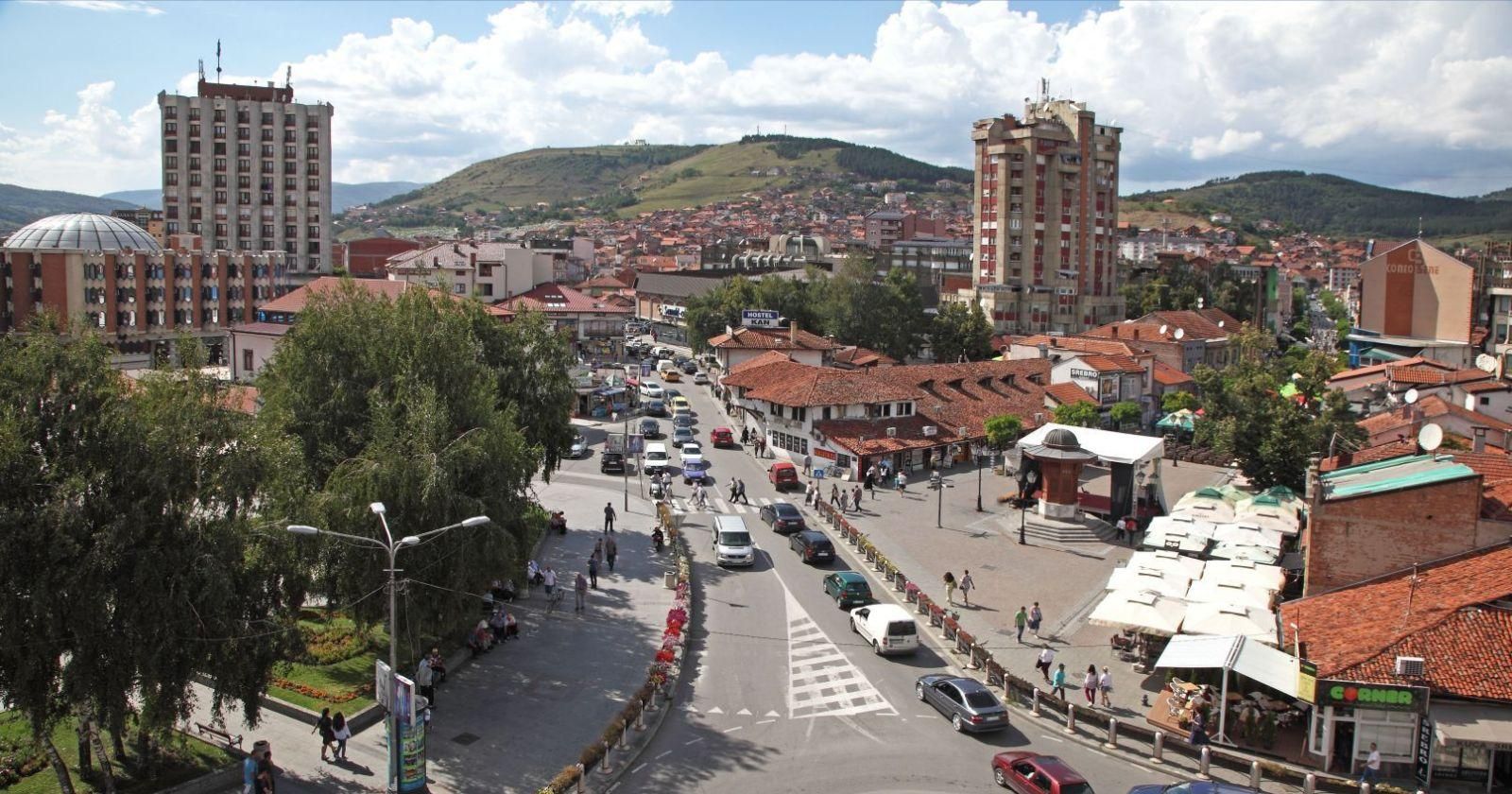
The director of a small village school near Tutin should not depend on decisions made at the level of the Ministry of Education in Belgrade.
Nor should decisions about roads connecting villages on the Pešter plateau depend on intervention by the president of the state.
Excessive centralization ultimately harms even those located within the “center of power”.
Decision-making also carries responsibility.
Relieving the Government of Serbia and the president of decisions that properly belong to lower levels of government would allow national institutions to focus on their actual constitutional responsibilities.
At the same time, responsibility for decisions affecting local and minority communities would be transferred to the people who live in those communities.
Balanced regional development and meaningful decentralization could address many of Serbia’s structural problems.
Minority political representation is one of them.

Comments