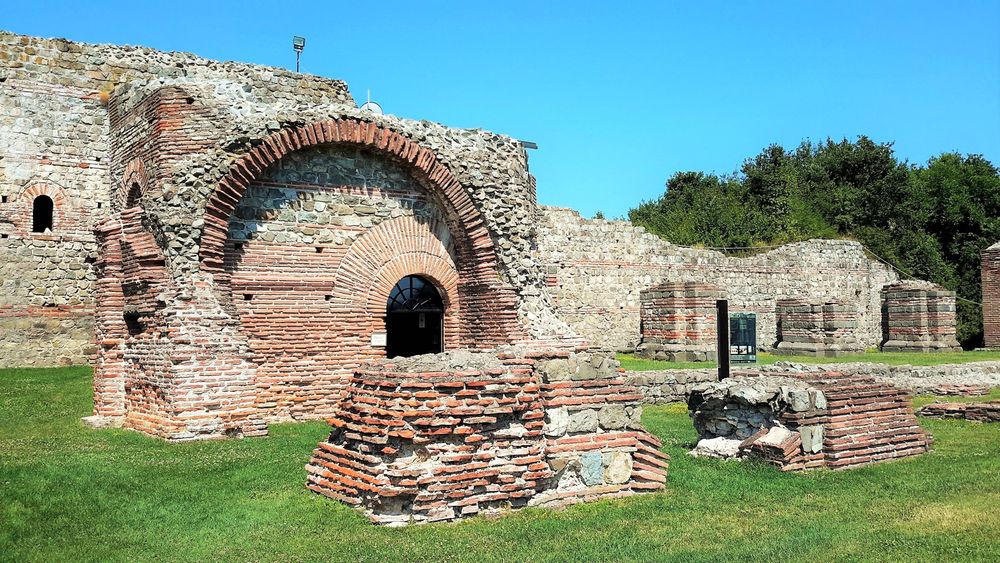
High temperatures, flash floods, prolonged periods of drought, freeze-thaw cycles, pollution and sudden changes in humidity are leaving increasingly visible marks on stone, façades, soil and archaeological sites across Serbia. Immovable cultural heritage is entering a critical phase in which climate change is ceasing to be merely a distant threat and is becoming an active factor in its physical survival.
A crack in the wall of a medieval church can often appear to be a harmless sign of age. A black crust on stone may look like just another layer of time, while moss on a monument can even seem picturesque. Yet behind these phenomena lie concrete and highly destructive physicochemical processes. Temperature causes materials to expand and contract, water penetrates porous structures and freezes, creating internal pressure, salts crystallize beneath surfaces, and drought alters the stability of the soil beneath foundations themselves.
For this reason, the protection of cultural monuments is moving beyond the traditional domains of art history and conservation and directly into the fields of materials physics, applied geology, climatology and environmental science.
This inseparable connection forms the starting point for an analysis of the impact of climate extremes on Serbia’s cultural heritage, linking the physicochemical degradation of materials with systemic climate adaptation policies. The focus is on immovable heritage, from open-air archaeological sites and religious architecture to monuments and historic urban areas, as well as on the ways in which altered hydrological cycles and extreme weather events affect the materials from which these structures are built.
The Physics of Degradation: What Happens Inside Materials?
The rise in average temperatures represents only one part of the problem. For construction materials themselves, sudden temperature fluctuations are considerably more dangerous. Stone, mortar, wood and brick expand when heated and contract when temperatures fall. When this cycle is repeated frequently, mechanical stresses develop which, in already weakened structures, lead to microscopic cracks, fragmentation and the detachment of surface layers. In organic materials, extreme heat accelerates drying, causing deformation and loss of elasticity.
When water enters the process, destruction accelerates many times over. Water that penetrates the capillaries of a material freezes when temperatures fall below zero and expands in volume by around 9%, acting like an internal wedge that fractures the structure. Salts have a similarly destructive effect: dissolved in water, they penetrate deep into porous stone, and as the water evaporates, the salts crystallize and create substantial pressure, causing flaking and the complete loss of the monument’s surface layer.
** Drought Threatens Foundations and Archaeological Layers**
Prolonged droughts create a different but equally dangerous type of risk. When clay-rich soil loses moisture, it loses volume and contracts. If this settlement beneath a historic structure does not occur evenly, foundations begin to sink differentially, creating dangerous cracks and threatening the load-bearing capacity of the entire structure. In addition, during periods of drought, the roots of surrounding vegetation search more intensively for moisture and penetrate toward underground parts of structures, mechanically damaging mortar joints.
Archaeological sites are particularly vulnerable. Organic objects made of wood, bone or textiles have remained preserved for centuries in wet soil precisely because of conditions in which free oxygen is absent. A sudden drop in groundwater levels and the drying of the soil introduce oxygen into these layers, dramatically accelerating the microbiological and chemical degradation of artefacts that had previously remained stable.
Who Protects Heritage When the Next Disaster Strikes?
When flash floodwater reaches an archaeological site, or when flooding and increased rainfall saturate a landslide beneath a historic complex, it is too late to debate institutional responsibilities. Who clears the riverbed? Who measures ground stability? Who monitors moisture in the walls? Who decides that a structure is under immediate threat, and where does the funding for emergency intervention come from? It is precisely at this point that climate change ceases to be merely a conservation issue and becomes an important institutional question.
Serbia’s Law on Cultural Heritage establishes the legal framework, but legal protection alone does not produce protection on the ground. A functional connection is required between regulations, scientific data, local government and the communities living in the immediate vicinity of cultural heritage sites.
Climate risks are highly local. Flash floods in the Rasina District do not have the same consequences as prolonged droughts in other parts of the country. Local governments therefore have a crucial role in the early detection of risks. The analysis proposes a more developed system of local monitoring and the establishment of a form of “eco-patrols” that would connect environmental observation with heritage protection. Their value lies in their continuous presence in the field: local residents are often the first to notice a new crack, a landslide, a change in the course of a stream or water accumulating in places where it had not previously appeared.
From Water Management to Interdisciplinary Cooperation
The synthesis of risks identifies flash floods and hydro-meteorological hazards as some of the most immediate threats to cultural heritage in central and southern Serbia. This leads to a very concrete recommendation: watercourse management and the clearing of riverbeds near historic sites must become a standard part of heritage protection policy rather than merely a municipal maintenance task. The same applies to spatial planning. Assessments of the impact of major infrastructure projects must also include the climate vulnerability of cultural heritage located within the affected area.
Protection against climate risks requires data that traditionally do not come from a single institution. Heritage protection institutes understand historical value, geological institutions know the stability of the terrain, meteorologists monitor extreme events, while local authorities manage space and municipal systems. If each works in isolation, risk remains in the gaps between their responsibilities. The analysis therefore proposes an interdisciplinary model in which heritage protection becomes an integral part of a broader national climate adaptation policy, alongside the establishment of a dedicated fund for emergency interventions so that responses are not delayed for months by bureaucratic procedures.
**Technology in the Service of Protection: Smart Sensors, Nanotechnology and Digital Archives ** Alongside institutional reforms, the analysis examines in detail technical and technological solutions that enable a shift from delayed restoration toward preventive protection.
- IoT sensors and microclimate monitoring: Small wireless sensors installed within a structure can continuously measure relative humidity, temperature, pollutant concentrations and micrometric movements in cracks. Data are collected in real time, allowing conservators to receive automatic warnings as soon as parameters exceed critical thresholds, long before damage becomes visible to the naked eye.
- Local climate modelling: Protection cannot be planned according to average temperatures for an entire country. Modelling at the level of an individual structure combines local meteorological data, the geology of the site and the specific properties of the materials used in construction, providing a precise assessment of future risk points.
-Nanotechnology and vapour: permeable materials: Modern hydrophobic coatings based on silanes and siloxanes are used to protect stone and façades from moisture. They prevent liquid water from penetrating from the outside while preserving vapour permeability, allowing walls to “breathe” so that moisture does not remain trapped inside. Ethyl silicates and nanomaterials are used for the deep consolidation of degraded stone, restoring its internal structure without changing the monument’s original appearance.
-Passive adaptation and digital twins: The analysis also points to the importance of restoring traditional natural ventilation systems, which in historic buildings have often been closed off by later alterations. Finally, 3D scanning and photogrammetry serve as a last line of defence. By creating precise “digital twins”, detailed information about the geometry and structure of a building can be preserved, enabling scientific documentation and accurate reconstruction in the event of severe damage.
Heritage as Part of Climate Policy
Climate policy is most often discussed through the language of energy, agriculture, transport and forestry, while cultural heritage can easily fall to the bottom of the list of priorities. This analysis seeks to move it from that position by showing that cultural monuments are not protected only at the moment when a conservator arrives to restore damaged stone.
Cultural heritage is protected much earlier: through meteorological data, a cleared riverbed, a moisture sensor installed in time, a dedicated budget line and a decision by local authorities to act while there is still something left to save.
Comments