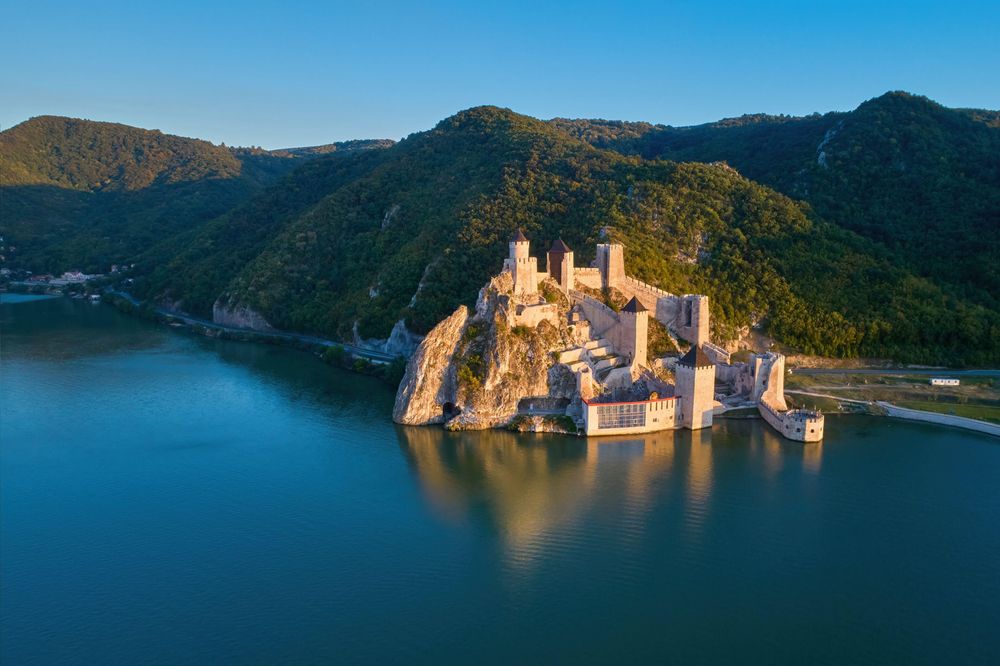
Climate change is usually associated with rising temperatures, floods, droughts and changes that directly affect people and nature. Much less often do we talk about its impact on what remains after generations: fortresses, churches, historic buildings, archaeological sites and other traces of cultural heritage.
Stone, wood and metal do not exist outside the climate.
Changes in temperature, humidity, precipitation and the intensity of extreme weather events alter the conditions in which cultural assets survive. What was built several centuries ago is now exposed to circumstances that may not have existed with the same intensity when those structures were created.
In Serbia, this problem is increasingly linked to the question of how cultural heritage can be preserved under conditions of climate change.
When the climate begins to change monuments
Immovable cultural heritage includes very different kinds of sites and structures, from archaeological sites and medieval religious buildings to historic settlements, fortresses and other cultural monuments.
Their materials react differently to changes in the environment.
Stone and metal are exposed to constant cycles of heating and cooling. During heatwaves, materials expand, while sudden drops in temperature cause them to contract.
Repeated cycles can, over time, cause microcracks, material fatigue and the detachment of parts of a structure.
Water creates an additional problem.
Heavy rainfall and flash floods can directly threaten the stability of structures, while increased humidity, frost and salts accelerate the deterioration of stone, mortar and other building materials.
On the other hand, prolonged drought and strong solar radiation speed up the evaporation of water from the pores of stone. After the water evaporates, salts remain and can crystallise inside the material, creating pressure and gradually damaging its surface layers.
The problem is not only temperature
Climate risk does not end with heatwaves.
Heavy rainfall can increase soil instability and contribute to landslides and rockfalls. The research specifically points to parts of Ponišavlje and Western Serbia as examples of areas where geomorphological instability can create additional risks for cultural heritage.
Wind can also become a factor of degradation.
Particles of dust, sand, ice or snow carried by strong winds act on the surface of monuments like very slow sandpaper. The process may not look dramatic from day to day, but over the years it can erase fine details from sculptures, inscriptions and stone surfaces.
For already weakened structures, storm winds can have much more immediate consequences, from damage to roofs and façades to threats to entire structures.
Cultural heritage therefore does not deteriorate only through one major event. It is often changed by hundreds of smaller processes repeated over many years.
Pollution further accelerates degradation
Climate factors interact with pollution.
In urban environments, atmospheric pollutants can contribute to the chemical deterioration of façades and monuments. Combined with water and elevated temperatures, some pollutants participate in chemical reactions that weaken limestone, mortar and other materials.
Changes in temperature and humidity can also favour the appearance of plants and other organisms that were previously not typical of a particular location.
Their roots can penetrate existing cracks and further damage walls and stone structures.
Climate change can therefore accelerate processes that existed before, while making them more frequent, more intense or harder to control.
Serbia needs to monitor what is happening before the damage becomes visible
One of the central conclusions of the research is the importance of monitoring.
Traditional approaches often respond only once the damage has already become visible. Contemporary cultural heritage protection attempts to intervene earlier.
Sensors installed in structures can continuously monitor temperature, air humidity, moisture in walls, vibrations and concentrations of certain pollutants.
Such data make it possible to detect changes before they cause serious damage.
Instead of waiting for a wall to crack, the idea is to identify the conditions that could lead to cracking.
This requires cooperation between conservators, architects, geologists, materials experts, climate researchers and institutions responsible for cultural heritage protection.
Climate change is therefore also changing the logic of conservation itself.
Protection can no longer be based only on the question of how to repair what has already been damaged. The question of how to anticipate risk is becoming increasingly important.
From nanocoatings to 3D scanning
Modern technologies offer possibilities that earlier generations of conservators did not have.
One direction of development concerns new protective materials and nanocoatings that can increase the resistance of certain surfaces to water, UV radiation and chemical degradation.
Their use, however, must be adapted to the original material so that an intervention intended to protect a monument does not itself become a source of damage.
Another direction is digital preservation.
3D scanning and photogrammetry make it possible to document architectural elements and entire structures with great precision.
A digital copy cannot replace a monument.
But it can preserve information about its shape, structure and details even if the physical structure later suffers serious damage.
Digital archives can therefore provide an important additional layer of cultural heritage protection.
Protection also begins around the structure itself
Not all measures are technological.
At sites threatened by water, erosion or unstable ground, drainage systems, soil stabilisation and the management of surface and groundwater can play an important role.
For historic structures, preserving or restoring traditional ventilation systems can also be important, as these allow natural regulation of interior moisture.
In other words, protecting a monument sometimes begins far beyond the wall itself.
It begins with the soil, water, vegetation and the space surrounding it.
Cultural heritage is not only a matter of materials
Perhaps the most important part of the problem lies beyond the stone itself.
Cultural heritage forms part of the way communities understand their own past and sense of belonging.
The disappearance of a structure is therefore not only a physical loss.
With it, part of local memory, the stories connected to a particular place and the sense of continuity between generations can also disappear.
The research points precisely to this connection between the preservation of cultural assets and the preservation of collective identity.
If the space in which a community’s history has left a physical trace disappears, the way that community can remember itself also changes.
For that reason, protecting heritage under conditions of climate change cannot be viewed solely as a technical question of conservation.
It is also a question of culture, the environment, local development, education and public policy.
The local community cannot remain only an observer
The research gives particular attention to the role of education and local residents.
Expert protection alone is not enough if the people living next to a cultural asset do not understand the risks to which it is exposed.
Environmental education can help residents recognise changes, report problems and participate in designing local protection measures.
One proposal that appears in the research is the establishment of specialised local services such as “eco-patrols”, which could monitor the relationship between environmental conditions and risks to cultural assets.
The idea is simple.
Heritage preservation cannot be the task of a single institution.
It requires experts, local government, the state and a community that understands the value of the space in which it lives.
Protection is needed before disaster occurs
A large part of the cultural heritage protection system has traditionally focused on conservation and restoration.
Climate change requires another step: prevention.
That means risk assessment, climate modelling, systematic monitoring, early warning and emergency intervention plans.
The research therefore also considers the possibility of establishing a special fund for monitoring and emergency interventions in the field of cultural heritage.
Such an approach is based on the idea that preventing major damage is cheaper and more responsible than trying to restore a site after the damage has already occurred.
But for such a system to function, clear data, institutional cooperation and transparent decision-making are necessary.
Heritage as an investment in the future
Climate change raises a question that goes beyond individual monuments.
What do we want to remain after us?
Cultural heritage is a physical connection between the past and generations yet to come. Preserving it is therefore not simply an attempt to save something old.
It is a decision to ensure that a part of shared memory and identity remains available in the future.
Under conditions of climate change, that decision is becoming increasingly demanding.
Monuments will not be able to adapt to a new climate on their own. Institutions and society will have to adapt the way they protect them.
Protecting cultural heritage is therefore not an expense that comes after more important problems have been solved. It is part of a long-term relationship with space, the environment and the identity of a community.
To read Bojan Branković’s complete research paper, including the methodology, results, academic references and full bibliography, see the documents below.
Comments