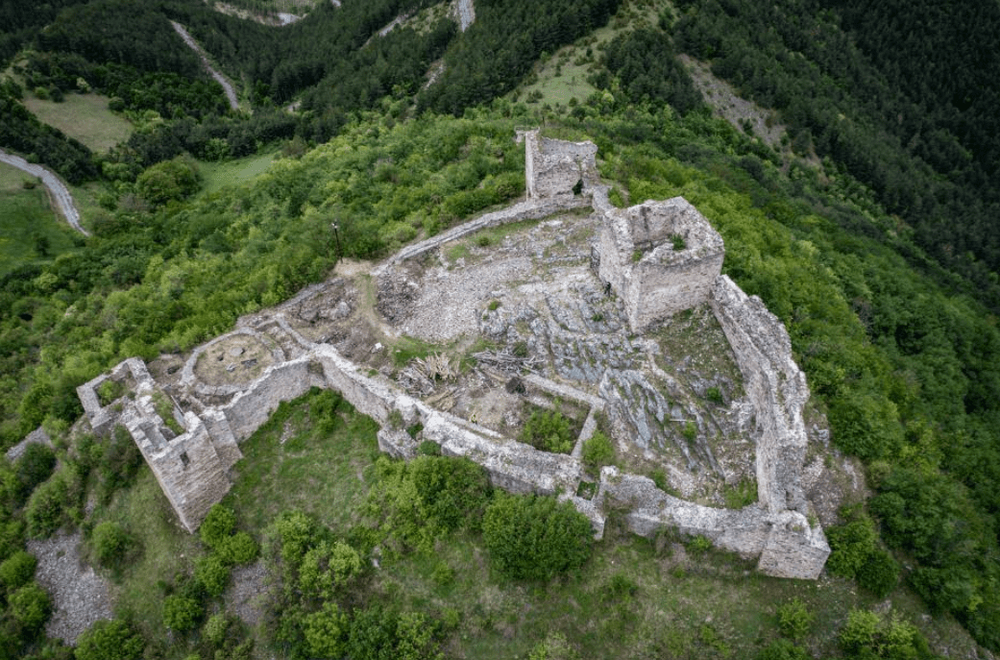
Cultural heritage is threatened not only by poor maintenance, neglect and uncontrolled construction. Climate change poses an increasingly serious risk, with its consequences becoming visible in historic buildings, archaeological sites and cultural monuments. Flash floods, prolonged droughts, sudden temperature fluctuations, moisture and stone erosion can accelerate the deterioration of structures that have survived for centuries.
The protection of immovable cultural heritage can no longer rely primarily on repairing damage after it has already occurred. Rather than waiting for water to penetrate monastery walls, cracks to appear in historic buildings or landslides to threaten archaeological sites, it is essential to develop systems capable of identifying risks in advance.
Such an approach brings together climate science, modern software tools, conservation methods and more responsible spatial management. Heritage protection does not begin only when a monument has been damaged. It begins much earlier, with data collection, risk assessment and the planning of preventive measures.
Why Are Global Climate Models Not Enough?
Traditional Global Climate Models (GCMs) make it possible to study large-scale climate processes, but their spatial resolution is often insufficiently detailed to assess the hazards facing individual historic structures. Information about changes in temperature or precipitation across a wider region does not necessarily reveal what is happening in a particular river valley, on a mountain slope or in the immediate surroundings of a medieval monastery.
For this reason, Regional Climate Models (RCMs) play an especially important role in modern cultural heritage protection. They process global climate data at a much finer spatial scale, allowing for a better understanding of the effects of local topography, precipitation patterns and conditions that encourage moisture accumulation.
The application of such models is particularly significant in Serbia's Rasina District and the West Morava River valley, where historic sites are exposed to various climatic and hydrological risks. More detailed spatial assessments can help identify areas requiring additional measurements, conservation monitoring and preventive protection.
Software, of course, cannot preserve a monument on its own. Its value lies in enabling experts to base their decisions on more detailed information rather than responding only after damage becomes visible.
From Protective Materials to Smart Sensors
Alongside computer modelling, specific technological methods play an important role in protecting historic structures. Particular attention is given to moisture control, as moisture is a major contributor to the deterioration of old stone, mortar and wall paintings.
Modern hydrophobic, vapour-permeable materials and coatings based on silanes and siloxanes can reduce the penetration of liquid water while allowing water vapour to pass through. This property is important because moisture trapped inside historic walls can cause further damage. At the same time, ethyl-silicate-based consolidants are used to strengthen weakened stone while seeking to preserve its original structure, texture and appearance.
Smart sensors connected through the Internet of Things (IoT) offer another possibility. Such systems can continuously monitor temperature, relative humidity, moisture within walls and certain air pollutants. When measured values exceed predefined thresholds, the system can alert conservators that further investigation or intervention is needed.
Methods that provide insight into the condition of a structure without damaging it are particularly valuable. Ground Penetrating Radar (GPR) uses electromagnetic waves to examine underground structures and the internal sections of walls, while infrared thermography helps identify temperature anomalies and possible areas of moisture accumulation.
Specialised conservation interventions also play an important role, including laser cleaning of delicate surfaces and the electrochemical removal of salts from historic masonry. Their application requires professional assessment and controlled conditions to ensure that conservation itself does not become a new source of damage.
The common purpose of these technologies is not to replace conservators, but to help them identify threats earlier and make interventions more precise.
Who Pays for Cultural Heritage Protection?
Climate change is not the only threat to historic sites. Intensive economic development, mining projects, infrastructure works and changes to river regimes can place additional pressure on the cultural and natural values of a particular area.
Cultural heritage protection must therefore also be understood as a legal, economic and democratic issue. One necessary change is the mandatory inclusion of Heritage Impact Assessments (HIAs) in the planning of major infrastructure and industrial projects. This would ensure that potential damage to archaeological sites and historic structures is considered before permits are issued and construction begins.
Consistent application and extension of the "polluter pays" principle is particularly important. Under this approach, investors would bear the costs of research, preventive protection and remediation of the consequences of their activities. The establishment of a dedicated fund for protecting cultural heritage against climate-related risks should also be considered, alongside stricter requirements for ecological restoration after natural resource extraction.
However, heritage protection cannot be left solely to professional institutions and investors. Greater transparency in spatial planning and development decisions, public access to information and the active involvement of local communities, civil society organisations and groups particularly exposed to the consequences of environmental degradation are essential.
Under such an approach, cultural heritage is neither an obstacle to economic development nor an expense to be reduced to the lowest possible level. It is a public good whose protection requires long-term planning and accountability.
Monuments, monasteries, fortresses and archaeological sites are not merely physical remains of the past. They form part of the historical experience of the communities and places in which they emerged. Their loss cannot always be compensated for through reconstruction, new construction or financial compensation.
The central question, therefore, is not only which software tools we have available today, but whether we are prepared to use knowledge, technology and public policy before the damage becomes irreversible.
The complete scientific paper, including its detailed methodology, proposed measures and references, is available in the attached PDF document.
Comments