Belgrade, 25–26 October 2026 | Photo report
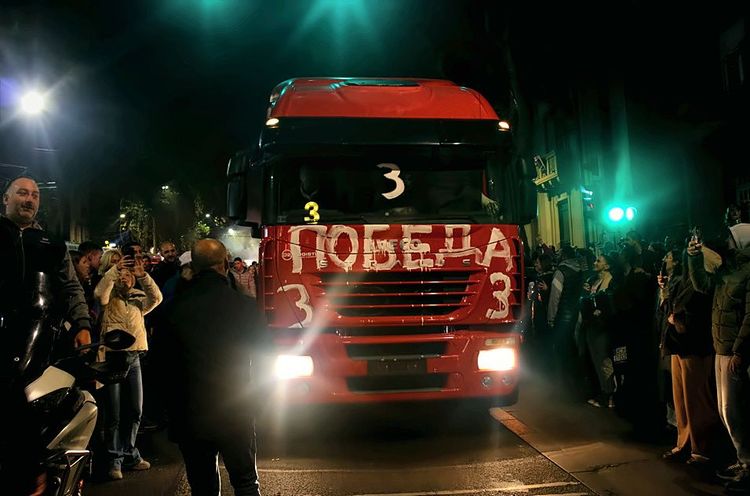
A truck bearing the large white word “POBEDA” (“VICTORY”) makes its way through a crowd heading towards Slavija Square. The number three, the Student List’s ballot number in the parliamentary election, is also painted on its red cab. All around it, people take photographs and raise phones and flags. Pyrotechnic smoke hangs in the air, and the streets that had been occupied by police earlier in the day are now filled with celebrating citizens. Only a few hours earlier, nobody in this part of Belgrade knew how election night would end.
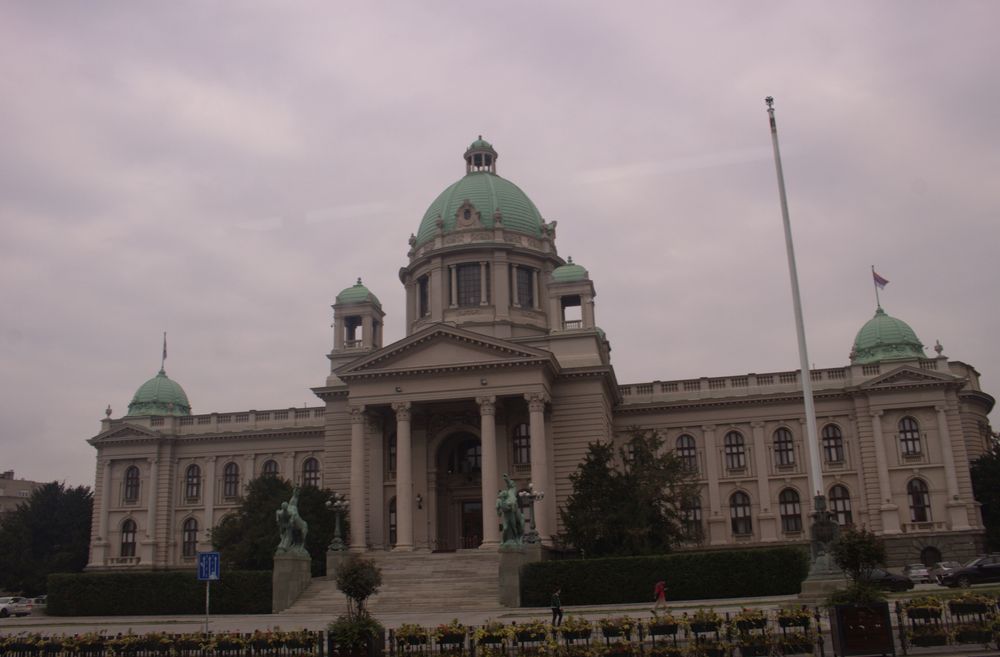
Sunday, 25 October, began far more quietly. In the morning, outside the National Assembly, almost nothing suggested what was to come. The city was slowly waking up, traffic was moving normally, and people were heading to polling stations. In Dušanovac, on Ustanička Street, voters waited in line. Similar scenes could be seen elsewhere in the city. There was little noise outside the polling stations. People arrived, waited, went inside and cast their votes.
Shortly after ten o’clock, however, reports of incidents began to arrive. From different parts of Serbia came reports of confrontations, suspected electoral irregularities and attacks on participants in the electoral process. Media outlets reported attacks on journalists and activists, while representatives of some electoral lists alleged intimidation and suspected organised voting. Some claims were contested and required further verification. In central Belgrade, where we were following events, the police were becoming visibly more prepared for the possibility of clashes.

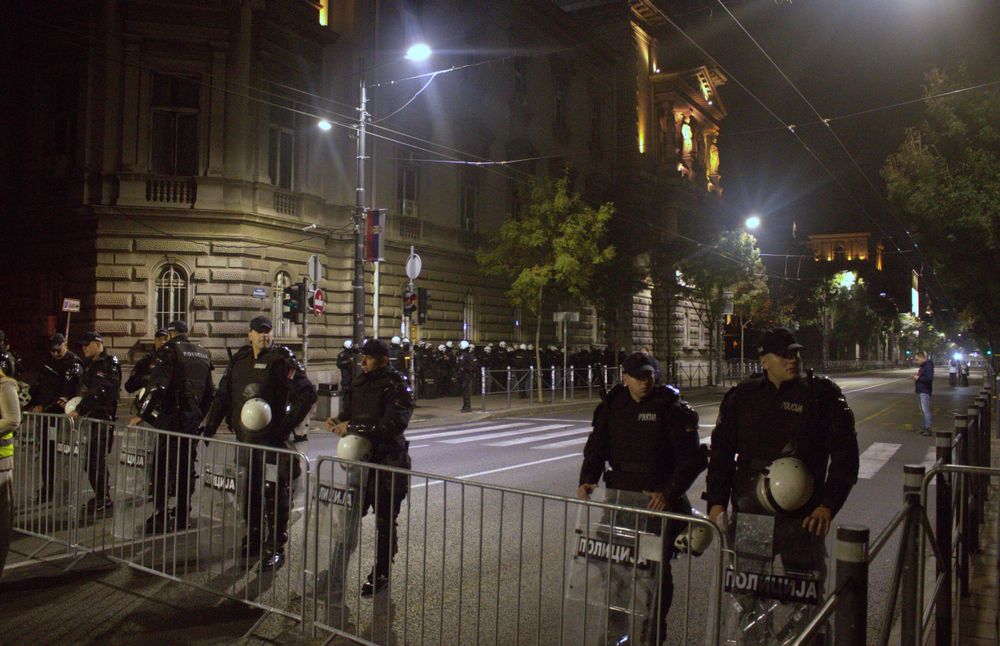
Part of Kralja Milana Street, near the headquarters of the Republic Electoral Commission, had been closed off with metal barriers. Police officers controlled access. As the day went on, more officers arrived, including units equipped to police public gatherings. Cordons formed at several points, with police vehicles positioned behind them. Journalists and television crews took up positions from which they could observe the approaches to the commission and Pionirski Park.
The photographs from those hours reveal a striking contrast between two parts of the city. At polling stations, people were still waiting to vote. Just a few kilometres away, in the centre, police barriers were already determining where people could and could not walk.

By the afternoon it was clear that turnout would be high. The Republic Electoral Commission announced that about 19.7 per cent of voters had cast their ballots by 10 a.m., almost twice the proportion recorded at the same point in the 2023 election. Queues remained outside some polling stations throughout the day, while estimates of turnout and reports of irregularities circulated on social media. At that stage, it was difficult to judge how the large number of voters would affect the result.

As voting drew to a close, groups of men in civilian clothes began appearing in the centre, some dressed predominantly in black. We watched them moving from the direction of Zeleni Venac, through the passage near Terazije, towards Pionirski Park, an area that had become known during the protests as “Ćacilend”. Some returned towards Terazije, watched the people gathered there, and went back again. Their presence caused concern among citizens. Photographs and observations of their movements alone, however, do not allow us to establish reliably who all these men were, what organisations they belonged to, or why they had come.
For more than a year and a half, Pionirski Park had been one of Belgrade’s most disputed public spaces. In March 2025, opponents of the student blockades established a tent encampment there, which citizens dubbed “Ćacilend”. The area between the Presidency and the National Assembly was fenced off and heavily guarded, and numerous clashes, incidents and allegations of attacks had been recorded over the preceding months. On election day itself, media outlets reported in the evening that tents were again being erected and equipment delivered inside the park.
Meanwhile, calls for a peaceful end to election day continued. The head of the European Union Delegation to Serbia, Andreas von Beckerath, expressed concern over reported violent incidents at polling stations and urged everyone to refrain from violence and provocation. At around 9 p.m., students taking part in the blockades advised citizens not to gather near locations where an increased presence of police and people without uniforms had been noticed. Their warning added to the uncertainty already felt in the streets.

Polling stations closed at 8 p.m., except for voters already waiting in line. Police cordons were still in place on Kralja Milana Street and nearby roads. At one point, we watched three police vehicles enter a section of the street that had already been closed off. People gathered nearby tried to find out what was happening behind the barriers, while reporters broadcast from in front of them. Voting had ended, but the result was still unknown.
In those circumstances, information travelled faster than it could be checked. Two young men near us said that Aleksandar Vučić’s list had won 54 per cent of the vote. We did not know where that figure had come from. A few minutes later, entirely different news arrived: the Student List had won. That first number was simply one of the unverified claims circulating in the street. The picture became clearer when, at around 9:30 p.m., Aleksandar Vučić acknowledged in an address from his election headquarters that the list he led had lost and that the Student List had won the most seats.

From that moment, the atmosphere in the city centre changed. People came out into the streets, stopped to check the news and called one another. There were shouts, car horns and singing. Those who had stood beside police barriers only minutes before were now heading towards the National Assembly, where an ever larger crowd was gathering. At Terazije, celebrations could be seen spreading from one group to another.
At the same time, men who had previously been inside Pionirski Park began leaving the area. A video appeared on social media showing a group dressed in black running from the direction of the park. We, too, saw groups moving hurriedly away at Terazije. During one such departure, according to what we observed on the ground, several young men who happened to be nearby were physically attacked. The photographs published here do not show the assault itself, so they cannot establish the attackers’ identities or reliably reconstruct what happened.
Soon, police units also began leaving some of their positions. Some of the metal barriers remained in the street, but an area that had looked all day like a place prepared for possible clashes was becoming a passageway for growing numbers of citizens.
Shortly after 10 p.m., people entered Pionirski Park. Barriers that had long separated it from the rest of the city were removed. People walked among the tents; some climbed onto structures, while others took photographs or shouted that the park was open again. Anger over everything that had happened in that space over the previous months was almost as visible as the joy at the election result.

Some of those present began dismantling and tearing down tents. Chairs and other objects were broken, banners were removed, and during the night one tent was set on fire. The fire also reached vehicles nearby. Some people carried chairs, signs and other objects out of the former encampment. They took them through the city and posed for photographs with them. To those people, the objects were souvenirs of the end of a space associated for more than a year and a half with political confrontation and restricted access to a public park.

The photographs also record something that cannot simply be called celebration. While some raised flags and took pictures, others destroyed the remaining structures. Removing the barriers reopened access to the park, but the destruction of property and the burning of tents were separate acts whose consequences did not end when people first entered the grounds.

From Pionirski Park, celebrations continued along the streets towards Slavija Square. Flags appeared on cars, people leaned out of windows and sunroofs, motorcyclists rode through the convoys, and crowds gathered at intersections. A group of young men climbed onto the area around the Slavija fountain. In the background came the sounds of horns, music and occasional pyrotechnics.
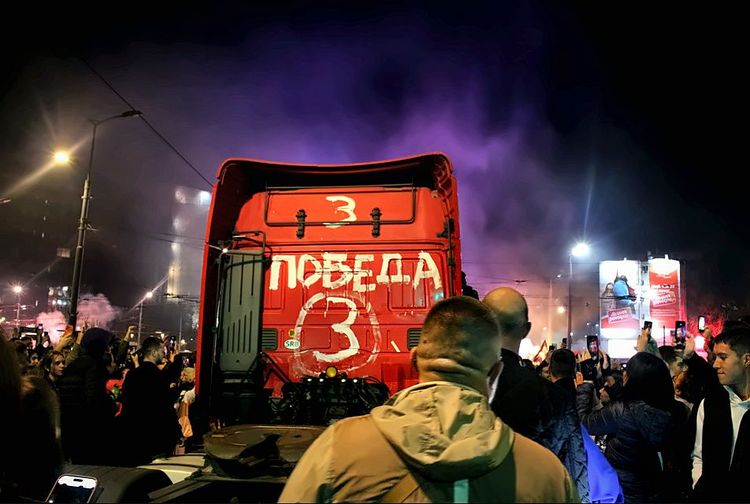
Among the vehicles driving through the city that night was a red truck carrying the large word “POBEDA”. Its size and vivid colour drew particular attention. People approached it, photographed it and followed its movement. On many phones, footage of that truck remained as one of the recognisable images of election night.
The celebrations continued after midnight. Some of those gathered travelled from the National Assembly towards Slavija and on to Karađorđev Park. Lines of cars formed at intersections, while others remained in the centre. An election result that had been uncertain only hours earlier had become the reason for a mass gathering.
According to preliminary results released by the Republic Electoral Commission after 97.56 per cent of polling stations had been processed, the “Students Win” Student List received 52.71 per cent of the vote, or 2,267,615 votes, which at that stage translated into 140 of the 250 parliamentary seats. The “Aleksandar Vučić – United Serbia” list received 39.17 per cent, or 104 seats. At the time this report was written, the final results had not yet been confirmed.

The following morning, central Belgrade looked different. Pionirski Park was accessible again, but the ground was littered with remains of tents, broken barriers, chairs and other objects. Traces of the previous night’s gathering and destruction were still visible. At the invitation of the Eko Straža initiative, a clean-up began at noon, with citizens, volunteers and municipal sanitation workers taking part.
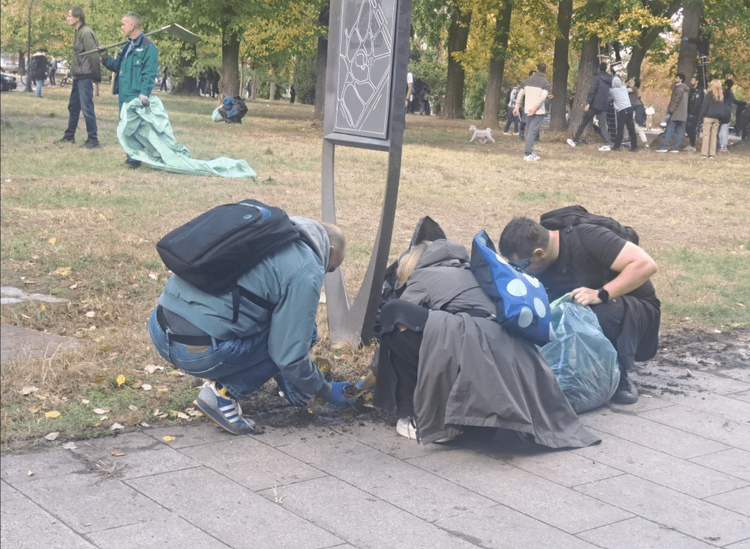
Some collected rubbish in large bags; others removed remaining structures, cleaned the paths and worked on the green areas. Families with children returned to the park. People who had watched the barriers being torn down the previous night could now walk through places they had long been unable to enter. Another gathering with music took place during the day, and celebrations continued among the trees and paths that people were trying to clean.
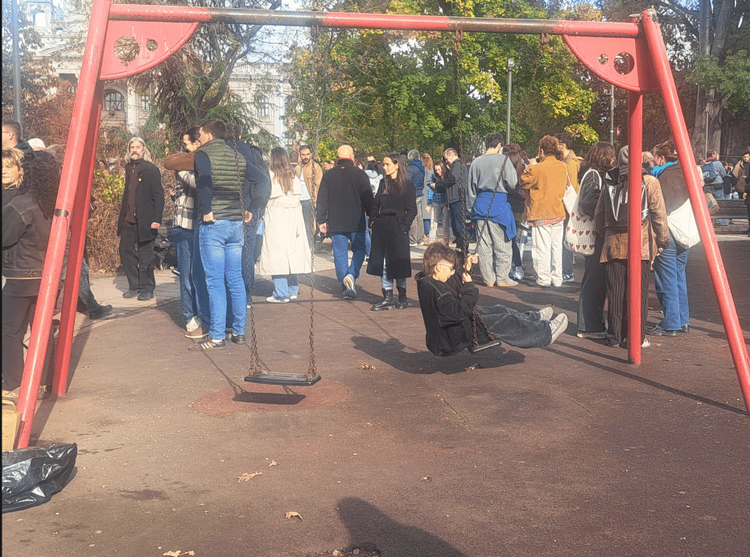
One of the final photographs in this series shows a children’s playground. People have returned to it. A few frames earlier, the same space held tents, discarded chairs and the remnants of dismantled structures.
On 25 October, people went to the polls while police closed off part of the city centre. By the end of the evening, the results were known, the barriers had been removed and celebrations had spread through the streets. The following day, citizens cleaned a park they had not been able to enter freely for more than a year and a half.
These photographs show all three scenes: people voting, people celebrating, and people picking up what was left after the celebration.
Each of them belongs to the story of 25 October.
Comments