The famous German philosopher Immanuel Kant, in his philosophical essay “Idea for a Universal History with a Cosmopolitan Purpose”, writes: “Aus so krummem Holze, als woraus der Mensch gemacht ist, kann nichts ganz Gerades gezimmert werden.” Translated from German, this would mean: “Out of the crooked timber of humanity, nothing entirely straight can be made.” Kant states this in the sixth proposition of the work, explaining that human beings, as creatures who require a master in order to restrain their arbitrary will, are incapable of establishing a perfectly just authority, because the master himself is only human, made from the same “crooked timber”.
Kant proposes that, since people cannot become perfect on their own, the problem should be addressed through the intelligent design of institutions and laws that direct and channel human selfishness and vanity towards the common good. Through the mechanism of “unsocial sociability”, in which innate antagonism and competition push people towards the development of reason, humanity is compelled to build a just civil society in which the freedom of the individual is limited only by the freedom of others.
Since no state can permanently progress in a condition of constant warfare, Kant’s final proposal is the gradual association of peoples into a cosmopolitan federation that, through international law, would secure lasting peace and enable the gradual, generational development of all human potential.
Functionality instead of moral transformation
Western, European, or liberal-democratic societies are to a large extent based on this idea. Secularisation, as a centuries-long process, gradually pushed Christianity out of the direct normative regulation of Western European societies. At the same time, the modern Western value system took shape, largely starting from the assumption that human beings, precisely because of their limitations and selfishness, cannot serve as the foundation of a perfectly just society. Social order is therefore built through institutions, rules and procedures intended to restrain human weaknesses and direct behaviour towards the common interest.
Such a system does not have to rest on the moral transformation of the individual. It sets boundaries, defines rules, introduces sanctions and, “for the sake of peace in the house”, seeks to create a society in which a person does not necessarily have to be moral for their actions to be socially acceptable and functional.
The Western European individual, or the individual in a liberal democracy, is primarily expected to respect laws and procedures and to avoid infringing on the freedom of others. They are not required to reach some universal ideal of moral perfection, but rather to align their behaviour with rules that apply to everyone. The system of sanctions and institutions thus assumes part of the function once exercised by moral authority: it corrects individual behaviour and encourages people to become functional members of society, regardless of their personal moral qualities.
From time to time, this system faces serious problems: authoritarian rulers may abuse institutions, corruption scandals emerge, and citizens take to the streets because of socio-economic problems and other forms of dissatisfaction. Yet the system itself seeks to survive precisely because of a deeply realistic and, in a certain sense, pessimistic understanding of human beings. When a problem arises, the response is most often sought in strengthening institutions, sanctions, control and regulation, rather than necessarily in the moral transformation of the individual.
This idea, in different forms and through different historical influences, represents one of the important foundations of the modern European institutional order, including the European Union. In such a system, the emphasis is primarily on society, institutions and rules, while the individual is given space for “individual freedom and autonomy”.
The limits of individual autonomy
However, this is precisely where the question of the actual scope of that autonomy arises. The individual formally has freedom of choice, but their behaviour is simultaneously shaped by laws, economic relations, institutions and broader social norms. From this perspective, criticism of contemporary liberal democracy can be directed towards the question of whether individual autonomy is truly complete or whether it is, to a significant extent, constrained by the system to which the individual is subordinate. In particular, the question arises as to how autonomous declared individual freedoms really are in a society that is at the same time strongly shaped by the logic of capitalism, the market and institutional interests.
The lack of a moral foundation in a system can also be seen through various problems these societies face at the personal level. Over the past several decades, mental illnesses such as depression, anxiety and various neurotic and psychotic disorders have been on the rise in most European countries. Alcoholism, the use of light and hard drugs, as well as promiscuous behaviour and sexually transmitted diseases, are also increasing.
The secularisation of society, the removal of morality from public life and a form of self-centredness have become predominant patterns of life in liberal democracies. Of course, this form of self-centredness is largely controlled, ironically, by the self-centredness of others, hence so many neuroses and psychoses. All of this can be “treated” with antidepressants and anxiolytics, so contemporary European society is simultaneously depressed, anxious and psychotic, yet functional.
Most things function, from politics and the economy to culture. No matter how much critics of such a system speak about the end of the West, deep corruption or the collapse of liberal democracies, these states function because, ultimately, the functionality of institutions is what is crucial to a liberal democracy.
Contemporary European democracy, in this sense, starts from the assumption that human beings are imperfect and that, precisely for this reason, society cannot rely on their morality, but on institutions that should ensure that they become useful and functional members of society.
The Islamic model: moral education of the individual
The opposing model to this system of institutions and sanctions is the Islamic education of the human being, or the individual. At the centre of the Islamic system are not institutions, laws or sanctions, but the education of the individual. Islam as a religion has not undergone a process of secularisation, and today it may be almost impossible to compare it with other religions, particularly Christianity, where a large number of societies that were predominantly Christian have now excluded religion from public life. Nevertheless, Islam is certainly important for comparison because of its focus on the moral education of the individual and because it represents a particular system that is continuously directed towards building a moral individual, while institutions, rules and laws remain in the background.
An important difference also exists in the process of acquiring knowledge. Knowledge in the West is technical and detached from morality, whereas knowledge and morality in Islam are inseparable. In the Islamic tradition, the education of a person is not reduced simply to the transmission of knowledge, but includes three interconnected processes: tarbiya, tazkiya and adab. Tarbiya refers to the gradual upbringing and formation of a person, the development of their abilities, character and responsibility; tazkiya refers to inner purification and moral improvement, that is, working on one’s own weaknesses, passions and actions; while adab represents the way in which this inner formation is expressed in one’s relationship with God, oneself and other people, through moderation, respect, dignity and responsible behaviour.
For this reason, in this tradition an educated person is not necessarily considered a morally formed person. Knowledge itself is not the ultimate goal: its value becomes visible only when it changes a person’s character and behaviour. This is why moral education is not an addition to education, but one of its most important goals: to turn a person who knows something into a person who knows how and why that knowledge should be used.
One of the greatest Islamic scholars, Al-Ghazali, says in his work “The Revival of the Religious Sciences”: “A person must strive to perform deeds that arise from good character until they become a habit and a kind of second nature.” Ibn Khaldun says in his “Muqaddimah”: “When habits characteristic of goodness first enter the soul of a good person and the soul acquires the habit of goodness, that person moves away from evil and finds it difficult to do anything evil. The same applies to a bad person when habits characteristic of evil take hold of him first.”
Islam is, in fact, an entire system based on the education of the individual, who should then build society and thereby realise their autonomy.
Institutions of moral education
At the heart of that system are institutions, primarily religious ones, from mektebs and madrasas to Islamic theological faculties, which are supposed to educate personnel who will further teach society morality. In the past, in genuinely Islamic states, there were many more organisations and institutions, as well as procedures whose primary role was the development of a person’s moral character.
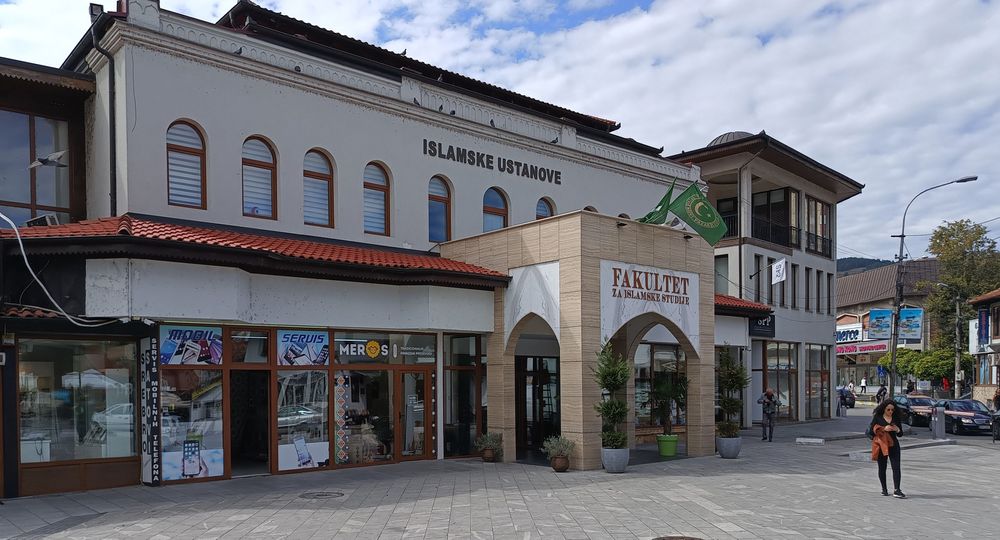
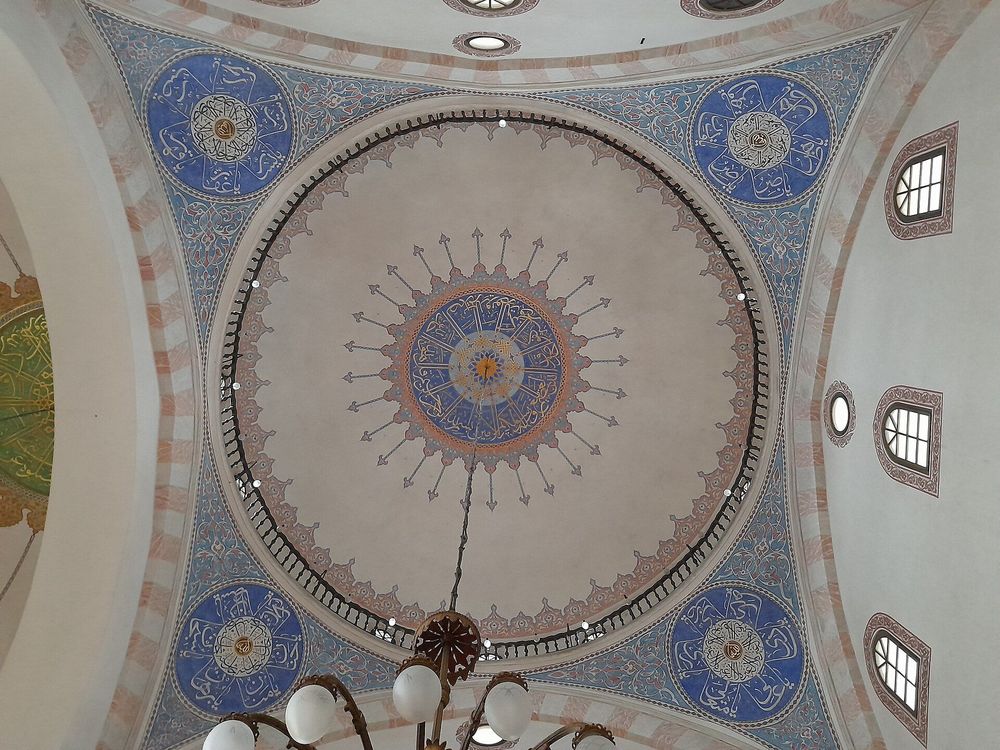
In the modern era, particularly in the case of Bosniaks, in Bosnia and Herzegovina and Sandžak, such an institution is the Islamic Community, and above all the mosque as a place where followers of Islam gather at least five times a day and once a week listen to the khutbah, that is, a sermon about moral behaviour.
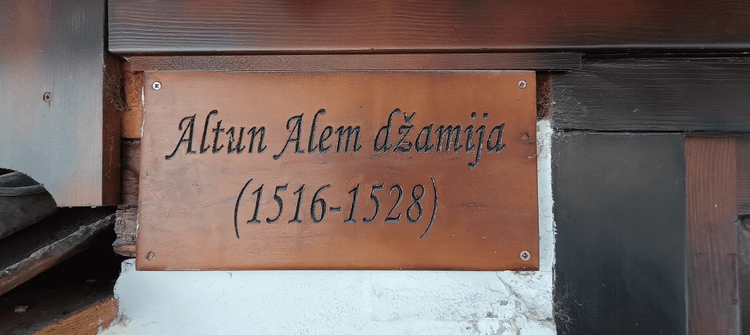
The tekke should not be forgotten either, as a type of institution that for centuries served as a place for the moral education of individuals. However, in the areas where Bosniaks live today, this institution has been more or less marginalised and its influence on Muslims is fairly limited. The Islamic Community, the mosque and the jamaat remain institutions that educate individuals today, and it must be acknowledged that this is proving quite difficult.
Bosniaks between two systems
In contemporary conditions, where Islam has been secularised in such a way that the moral education of the individual has been pushed into the background in comparison with the ceremonial part of Islam, namely religious rituals and the preservation of Islamic symbols, it becomes questionable whether moral education is possible at all. In this situation, Bosniaks, who civilisationally belong both to the West and to Islam, face a difficult choice.
A choice must be made between the functionality of a state or community and moral education. The current situation is the least favourable and, essentially, it is not a choice between two options but a balancing act between both. This balancing produces a situation in which the system is dysfunctional, while at the same time people are poorly educated in moral terms and without moral direction, thus creating the worst possible option.
Among Bosniaks, there is a deep conviction that moral education in Islam is the only correct option, yet they do not move towards it because the Western system of rules and sanctions is simultaneously regarded as functional. The disadvantage of this situation lies precisely in the fact that the Western system is spoken of positively, moral education through Islam is believed to be the most correct path, yet neither system is actually chosen.
Within the Bosniak community, this creates a high degree of frustration: functionality is desired in order to make life easier, but no one is prepared to publicly renounce the Islamic model of education. The frustrations go so far that some even attempt to combine these two systems while retaining key parts of both.
Alija Izetbegović, Muamer Zukorlić and the question of the hybrid
For the sake of clarification, this is not entirely impossible. It is possible to have a Western system with some elements of Islamic moral education, as promoted by Alija Izetbegović, or an Islamic system of moral education with certain institutions of the Western system, as promoted by Muamer Zukorlić.
This is, of course, analysed at the declarative level. In practical terms, Alija Izetbegović placed far greater emphasis on moral education, while Muamer Zukorlić was “more pragmatic in nature”. However, having a system positioned exactly in the middle between these two models is essentially impossible.
Combining the foundations of these systems is difficult because one takes society as its central element, while the other places the individual at the centre. One takes functionality as its reference value, while the other takes morality as its reference value. At their foundations, these two principles, or values, are often opposed. What is moral does not always have to be functional, while what is functional is often immoral.
Freedom, justice and the dominant model
The same applies to values such as freedom and justice. A community must decide which value is more important to it. Where there is a great deal of freedom, there is less order and consequently less justice. Where justice is pursued, many individuals give up part of their freedom for the sake of order or justice. It is therefore very difficult to create societies that stand exactly in the middle, that is, societies that are simultaneously free and just.
Consequently, Western societies are more functional, but with fewer freedoms and therefore, relatively speaking, more just. On the other hand, the Islamic system implies justice grounded in morality. These two systems can have hybrids, but one system must be more dominant than the other. A system located exactly in the middle, if it began to function at all, would function only briefly and with major problems.
Sandžak and the price of indecision
Therefore, a choice between functionality and morality must be made, and it must be made as soon as possible. The choice that currently exists is dysfunctionality and immorality, which represents the least favourable situation. This is even more visible in Sandžak, partly because Bosniaks in Sandžak essentially understand neither the West nor the Islamic system of education, and partly because they live in Serbia, a state whose majority population professes another religion, while the system itself is not particularly functional and is largely based on the grey economy and an unfortunate geopolitical balancing act between East and West.
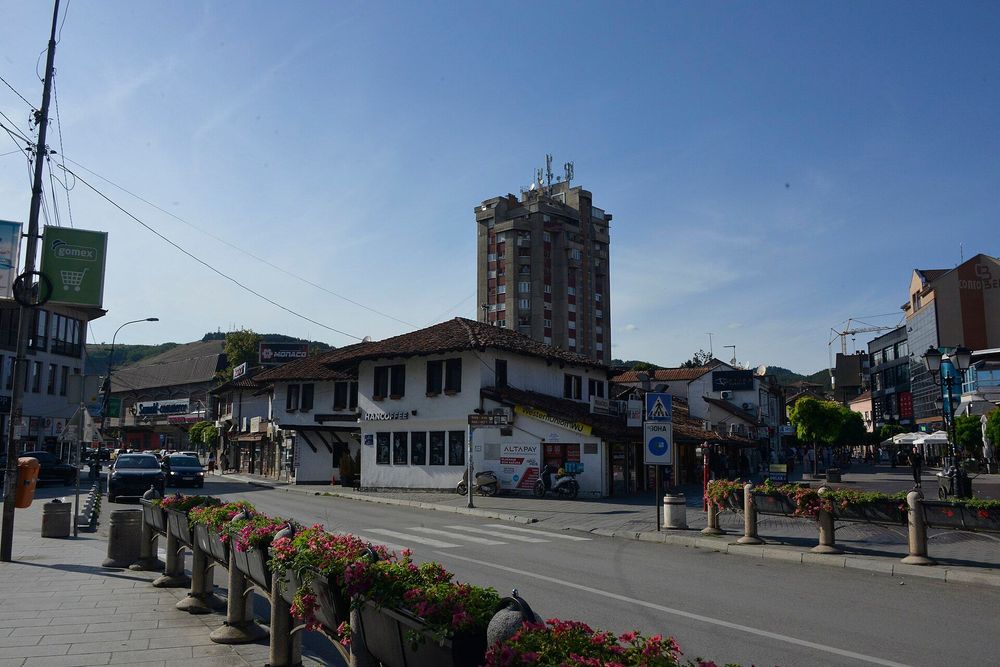
Bosniaks must therefore decide as soon as possible, ideologically, which system they want to live in, or which system should be dominant in their lives. The current situation, in which the majority believe that they are balancing between two systems, is actually an illusion. There is no real balance: if someone does not choose, the choice is made for them and, as a rule, unfortunately, it turns out to be the worst one.
Thus, Bosniaks, and especially the people of Sandžak, have been assigned dysfunctionality and a lack of moral education. If we drew a parallel with Serbs or the Serbian state and its attempts to balance between the European Union on one side and China and Russia on the other, that balance has in fact produced the least favourable situation: the negative characteristics of both systems have been adopted.
A large part of the population has become cold and technocratic, like the population of the European Union, while at the same time the state remains dysfunctional. Authoritarianism has been taken from the East, but at the same time there is a high degree of disorder, and there is little of that Eastern “warmth and hospitality”.
If one looks more closely, Belgrade is a good example of this. The population has a reduced degree of empathy, while at the same time nothing functions. Most of the population is religious or superstitious, like the population of Eastern societies, but at the same time it is amoral and without clearly defined values. Corruption and injustice are constantly identified as some of the greatest problems.
All these phenomena can be viewed as consequences of attempts to balance and of the fact that, when a society balances between two systems without a clear choice, the choice ultimately imposes itself, and as a rule it is the worst one.
Yugoslavia and Slovenia as examples of a chosen direction
Good examples of making a choice, both historically and in the contemporary period, would be Yugoslavia during socialism and the modern Republic of Slovenia.
The SFRY can be viewed as a hybrid of an Eastern political system and a Western social model, with Western elements becoming increasingly dominant, especially from the 1960s onwards. Although the state retained a one-party system, certain planned-economy elements and socialist ideology, everyday life, the economy and culture increasingly moved closer to the West: developed self-management and market elements in the economy, private entrepreneurship in certain sectors, freedom to travel and work in Western Europe, mass consumption and a strong influence of Western culture. For this reason, the SFRY was not a balance between East and West, nor did its strength arise from an attempt to belong equally to both models. On the contrary, it was a system with a clearly dominant Western component, while retaining certain political and ideological elements from the Eastern model. It is therefore important to understand that a hybrid does not mean neutral balancing between two models, but rather choosing one dominant direction while selectively adopting useful elements from the other. Yugoslavia, although formally socialist and Eastern, was predominantly Western and market-oriented. The market functioned, but there was a corrective in the form of socialist self-management, which aspired towards equality and justice.
The modern Republic of Slovenia is also a kind of hybrid today, but a hybrid with a clearly chosen direction. It belongs simultaneously to the Central European and Balkan spaces, yet politically, economically and socially it is distinctly oriented towards Europe and Western institutions. Similarly, its economic model combines market capitalism with a relatively strong welfare state: private ownership, competition and the market form the basis of the economy, while public institutions provide social protection, public services and mechanisms of redistribution. Here too, therefore, a hybrid does not mean balancing between two worlds, but a clear commitment to a dominant model while adopting elements of another where they contribute to its functionality.
A functional society with space for moral education
Consequently, the author of this text believes that Bosniaks must make a choice as soon as possible, but he also has a preference for the hybrid advocated by Alija Izetbegović. We would therefore be speaking here of a model based on functionality, according to which people should primarily be useful rather than necessarily good, while nevertheless preserving space for institutions of moral education. On a European continent largely based on functionality and separated from traditional moral foundations, a system based on the moral education of the individual could automatically be regarded as hostile, particularly when Islamic education is concerned. A choice must therefore be made, and the author recommends a hybrid system of Western society with certain elements of moral education.
The essence of the choice, however, is that society must primarily be functional. Institutions should produce order, responsibility and useful results, while individuals are primarily expected to be capable of contributing to the community. Moral education should therefore not form the foundation of the social system, but rather serve as an important corrective, a space in which a person learns not only how to be functional, but also why certain things should be done. In this sense, for Bosniaks, and particularly for Bosniaks in Sandžak, the most realistic model is a functional society with a limited but preserved space for moral education.
Comments