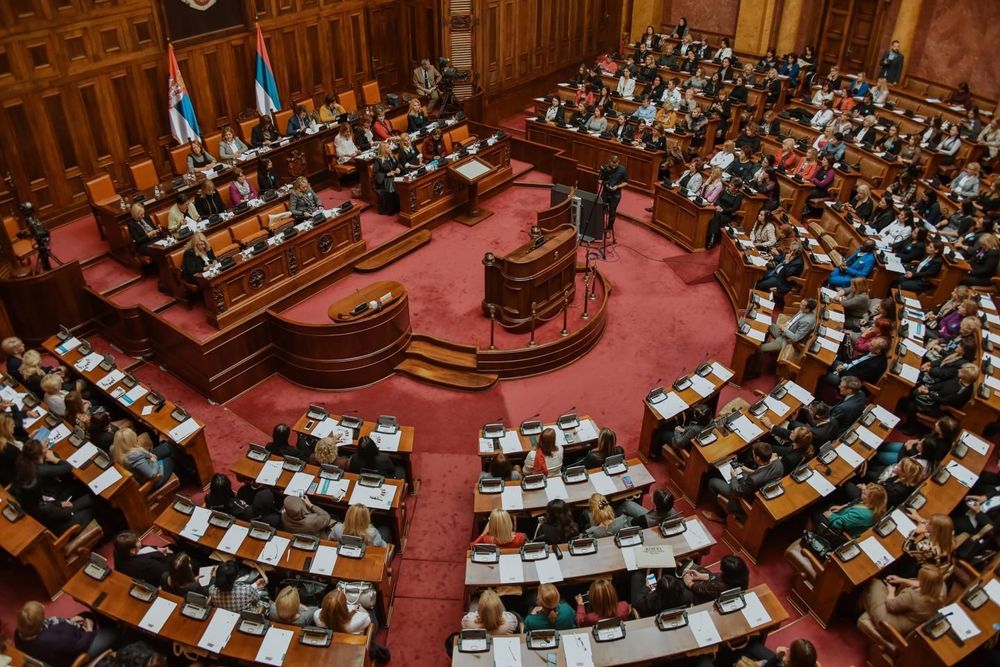
The electoral lists for the upcoming parliamentary elections contain 2,418 candidates, of whom 1,134 are women, or 46.88 per cent, according to figures published by the Republic Electoral Commission on 9 October. Looking solely at gender representation among candidates, Serbia is approaching parity. However, the law already requires at least 40 per cent of candidates on every electoral list to belong to the less represented gender, with at least two people of that gender in every group of five candidates. A relatively high proportion of women on electoral lists is therefore not exclusively the result of voluntary decisions by political organisations. To a significant extent, it is also the result of a legal requirement.
The difference between appearing on an electoral list and exercising real political influence becomes especially important when meeting or exceeding the electoral standard is presented as proof of a commitment to gender equality. It is entirely legitimate for a party to point out that it has nominated more women than the law requires. But the number of female candidates alone does not tell us who determines that party's policies, who draws up its electoral list, who allocates campaign funds or who will lead its parliamentary group after the election.
In this context, it is worth looking at the election campaign in Sandžak, where two political organisations, the Justice and Reconciliation Party and the Sandžak Democratic Party, have publicly emphasised that women account for more than half of their candidates.
On 16 September, the Justice and Reconciliation Party announced that, for the first time in the party's history, women made up more than 50 per cent of its submitted electoral list. SPP president Usame Zukorlić particularly emphasised this achievement. A similar figure was highlighted when the Sandžak Democratic Party and the Montenegrin Democratic Party submitted their joint list, entitled “Rasim Ljajić – Ljudski”. Both organisations' electoral lists bear the names of their male political leaders, while the increased representation of women is presented as one of the positive features of their candidacies.
That fact alone does not prove that women within those parties lack opportunities to participate in decision-making. The person whose name appears on an electoral list is not necessarily its first candidate, and the presence of a man at the head of a party does not mean that its female candidates lack political authority. However, the actual distribution of political opportunities becomes clearer when we examine the order of candidates.
According to an analysis published by the Mahala news portal, the SPP list has 181 candidates, including 96 women and 85 men. Women therefore account for 53.04 per cent of the list. However, the first female candidate, Misala Pramenković, is in third place, while the first two positions are occupied by men. Four of the first nine candidates are women. The SDP–CDP list contains 126 women and 124 men, meaning that women account for 50.4 per cent. Yet the first three candidates are men, while the first woman, Jelena Jakovljević, is in fourth place. Rasim Ljajić, whose name appears in the list's title, is not himself a parliamentary candidate. The first candidate is Dženan Palamar.
These differences are not negligible. In a proportional electoral system with closed lists, seats are generally allocated according to the predetermined order of candidates. If, for example, a list won two seats and its first two candidates were men, its initial representation in parliament would be exclusively male. The number of women occupying the final fifty or one hundred places on that list would then have no immediate effect on the composition of its parliamentary group. Subsequent withdrawals and replacements can change that composition, but they do not diminish the importance of the original order.
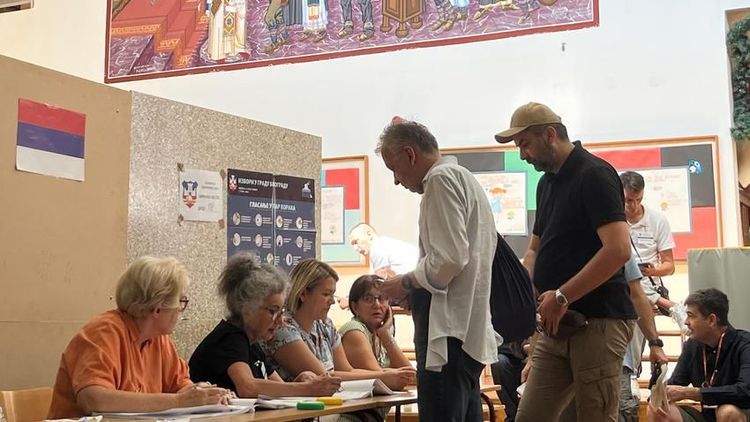
For that reason, assessing electoral equality requires examining at least two separate things: how many women have been nominated and which positions they occupy. Even more important is the question of how much influence women have over an organisation's policies before the electoral list is drawn up at all.
This problem is not limited to two parties from Sandžak.
In an analysis published on 9 October, FemPlatz found that women constituted more than half of the candidates on six of the eighteen electoral lists. These included SPP, SDP–CDP, the Russian Party, Bogoljub Karić's Strength of Serbia Movement, the Albanian Coalition and the Mother Serbia – Gruda list. At the same time, a man occupied the first candidate position on seventeen of the eighteen lists.
The Strength of Serbia Movement provides a particularly interesting example, with 150 women among its 250 candidates, or 60 per cent. During the campaign, Bogoljub Karić presented this decision as an expression of confidence in women, particularly emphasising mothers and the family. Nevertheless, in the Facebook promotional videos examined by FemPlatz, only Karić was recorded speaking, with no presentation of the programme by the female candidates.
This finding cannot establish what roles female candidates play within the party's internal structures, nor does it cover every possible form of their public activity. But it raises a question that goes beyond the number of women on an electoral list. If a political organisation nominates a majority of women, why are their political ideas, professional experience and proposals not an equally recognisable part of its public campaign?
Similar questions can be asked of the larger electoral lists. According to FemPlatz's analysis, women account for 44 per cent of candidates on both the “Aleksandar Vučić – Ujedinjena Srbija” and “Studentska lista – Studenti pobeđuju” lists. Four of the first ten positions on each list are occupied by women. Among the first thirty candidates on the student list, women's representation rises to 50 per cent, while on the list gathered around the SNS it is approximately 43 per cent.
This shows that the statutory quota can be fulfilled in different ways. But such comparisons alone cannot answer questions about the internal democracy of political organisations. We also need to know how candidates were selected, who had the opportunity to nominate individuals, whether open nomination procedures existed and how extensively female party members participated in decision-making.
A parliament where women are present but underrepresented in leadership
In February 2025, the OSCE Office for Democratic Institutions and Human Rights (ODIHR), in cooperation with Serbia's National Assembly and with the support of the OSCE Mission, completed a report on a participatory gender audit of parliament. The research examined documents, conducted interviews and focus groups, and included a survey involving 327 members of parliament and parliamentary staff, carried out during 2024.
Its findings are particularly important for understanding the current election campaign because they show what happens after the electoral process produces a relatively high number of female MPs.
According to data collected at the time, the National Assembly had 94 female MPs, representing 37.6 per cent of all members. However, in September 2024, women chaired only two of the sixteen parliamentary groups, or 12.5 per cent. Seven of the nineteen parliamentary committee chairs were women. Only three women, compared with fifteen men, held deputy committee chair positions.
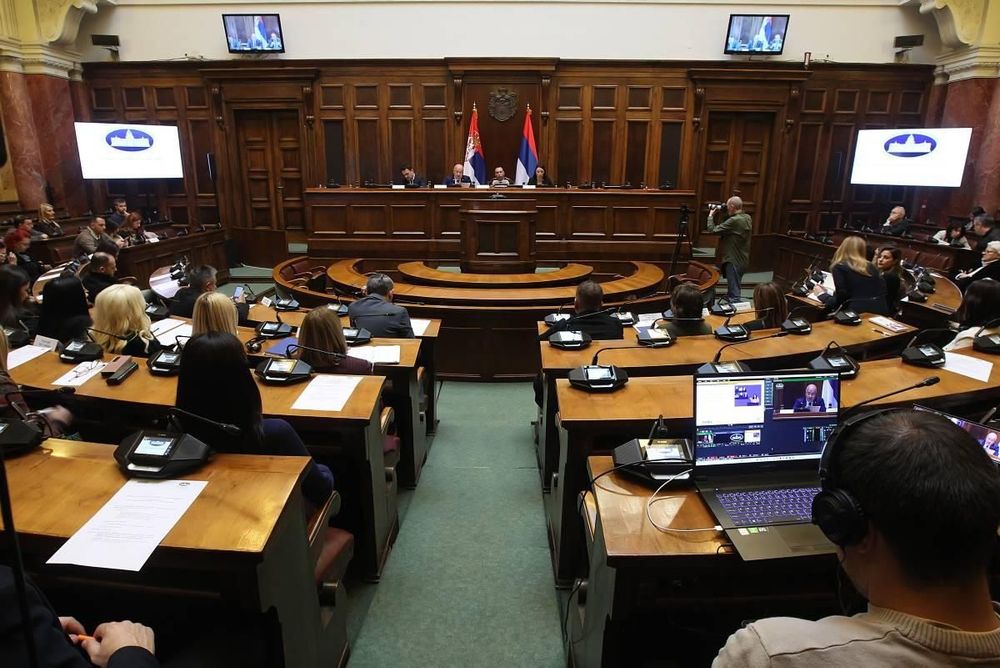
The figures paint a different picture when we move from the number of parliamentary seats to the distribution of leadership responsibilities.
At the same time, the data do not tell an entirely negative story. In the National Assembly's leadership at the time, women formed a majority when the speaker and deputy speakers were considered together. Women also made up the majority of parliamentary staff and held a significant share of management positions.
That is precisely why gender equality should not be assessed through a single overall percentage. Progress may be made in one area while inequalities persist in another.
The gender audit also identified a division of responsibilities reminiscent of traditional ideas about “women's” and “men's” political issues. Women were more numerous on committees dealing with children's rights, social affairs, healthcare and European integration, while they were less represented on committees responsible for finance, the budget, defence, security, agriculture and Kosovo-related issues.
This distribution does not mean that women are uninterested in economics or security, or that men are uninterested in social protection. But it does call for serious scrutiny of how parliamentary responsibilities are allocated.
One of ODIHR's most serious criticisms concerned the lack of data about the actual political activities of male and female MPs. According to the findings of the 2024 audit, the National Assembly did not systematically collect information on how many bills or amendments women proposed, how often they spoke in plenary sessions, or how long they participated in debates and committee work.
Without such information, it is extremely difficult to distinguish formal representation from meaningful parliamentary participation.
Another finding concerned political parties. The audit established that most lacked action plans to improve gender equality and did not regularly publish reports on gender representation within their own bodies. Systematic training was lacking, as were appropriate policies against gender-based discrimination and violence targeting women politicians.
The report reflects conditions documented during 2024 and cannot, by itself, establish that none of these problems have changed in the meantime. But it provides a documented basis for a question that should also be put to political parties during the current campaign: beyond nominating women, what have they done to change the conditions in which women participate in politics?
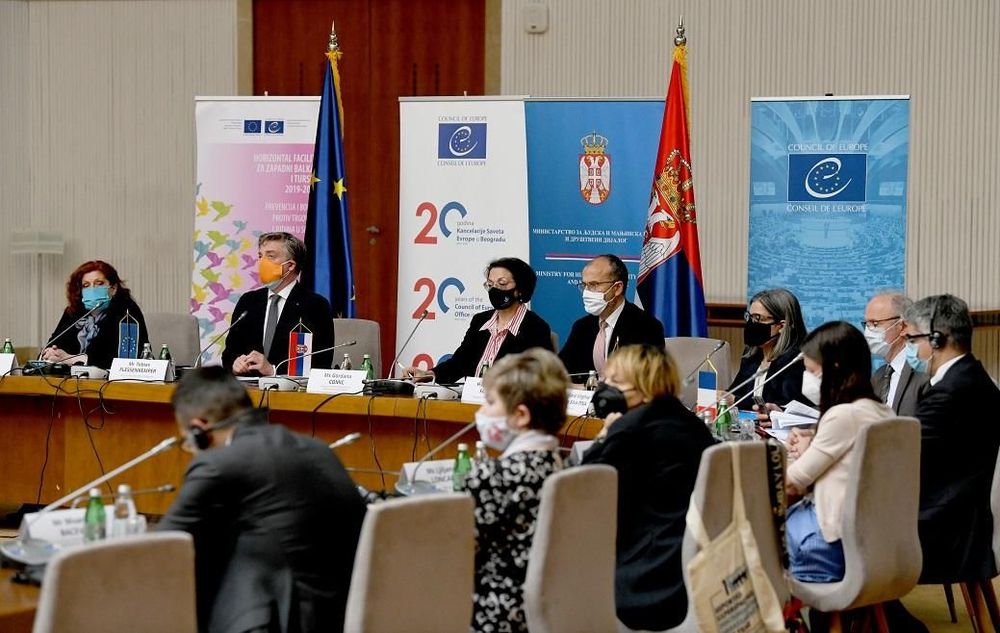
Equality is tested even when there are no elections
Women's position in politics does not end when they secure a parliamentary mandate. A female MP may be formally equal to her male colleagues while facing additional obstacles that affect her political work. These include the unequal distribution of family responsibilities, sexist behaviour, limited support for combining work and parenthood, and insufficient access to informal decision-making circles.
Among other things, ODIHR found that the parliament at the time lacked sufficiently developed mechanisms for remote work, flexible working arrangements and childcare support. It also highlighted the need for clearer procedures to protect against sexist language, harassment and gender-based discrimination.
These issues are much harder to turn into a simple election message than the claim that women account for 50 or 60 per cent of candidates. They require changes to working arrangements, rules, budgets and relationships within institutions.
It is particularly important that a gender-sensitive parliament also implies a different approach to lawmaking. A proposal concerning public transport, tax policy, healthcare or employment relations may affect women and men differently. The consequences of such legislation should therefore also be assessed from a gender-equality perspective.
According to the audit, the National Assembly did not have a systematic practice of assessing the gender impact of proposed legislation. Responsibility for these issues was often associated almost exclusively with the committee responsible for gender equality, rather than being integrated into the work of every parliamentary committee. ODIHR recommended introducing gender analysis, improving parliamentary oversight and monitoring the implementation of adopted laws.
These recommendations demonstrate how narrow it is to view gender equality solely through the question of who occupies a parliamentary seat.
A female MP voting on the budget has a responsibility to understand how public funds will affect citizens. A male MP proposing labour legislation should understand how that law will affect employed women and men. Members of the security committee must be able to examine the consequences of particular policies for different social groups.
Equality is not a separate issue that parliament addresses only when women's rights appear on the agenda. It is a question of the quality of public policies and the responsibility of everyone who makes them.
Who represents women?
There is another question that is often overlooked in discussions of this kind. A larger number of female MPs does not, in itself, guarantee that they will all advocate the same policies or hold identical positions on women's rights.
Women are not a single political group. They include conservative and liberal politicians, women on the left and right, and advocates of different economic models and different views on the family, reproductive rights, education, social protection and the relationship between the state and the individual.
A female candidate has the right to advocate political positions with which others disagree, just like a man on an electoral list. Her political independence cannot be measured by whether she belongs to a particular ideological group.
Nevertheless, it is legitimate to ask whether she had the opportunity to develop and publicly defend her own position, whether she participates in party bodies and whether she is prepared to explain the policies for which she is seeking a mandate.
It also matters which women are given the opportunity to become candidates. The ODIHR report specifically highlighted the need for greater inclusion of women from underrepresented groups, including women with disabilities, Roma women, women belonging to national minorities and younger women.
The position of a woman who has held high political office for years is not the same as that of a woman seeking to enter politics without party connections, substantial financial resources or social standing. If political representation expands only within a narrow circle of already influential people, increasing the number of women may not eliminate other forms of exclusion.
Political organisations that invoke gender equality should therefore be judged by their publicly verifiable practices: how they nominate candidates, distribute leadership positions, protect female members from discrimination, allow internal disagreement, make women candidates visible during campaigns and what policies they intend to implement.
In this respect, men also bear responsibility for gender equality. It cannot remain a task solely for women's forums or individual female MPs. If the most important decisions in a political organisation are concentrated within its leadership, that leadership also determines how much space is opened up for different voices.
The upcoming parliamentary elections show that women in Serbia, at least in terms of candidate lists, are much more strongly represented than they were several decades ago. That is genuine progress, made possible by statutory quotas and years of efforts to ensure that politics is no longer a sphere predominantly reserved for men.
But a figure that looks impressive in a press release is not enough to assess how deep that progress really runs.
Political parties that emphasise the percentage of female candidates can also be expected to explain to the public who occupies the leading positions on their lists, how the women candidates were selected, who participates in their decision-making bodies and what concrete changes they propose in the field of gender equality.
The same standard should apply to every political organisation, regardless of its ideology, size, national affiliation or relationship to those in power.
Because the percentage of women on an electoral list tells us how many women a party has nominated. The distribution of responsibility and political influence tells us far more about the place they occupy within that party.
And it is precisely that second piece of information that remains much harder to find during election campaigns.
Comments