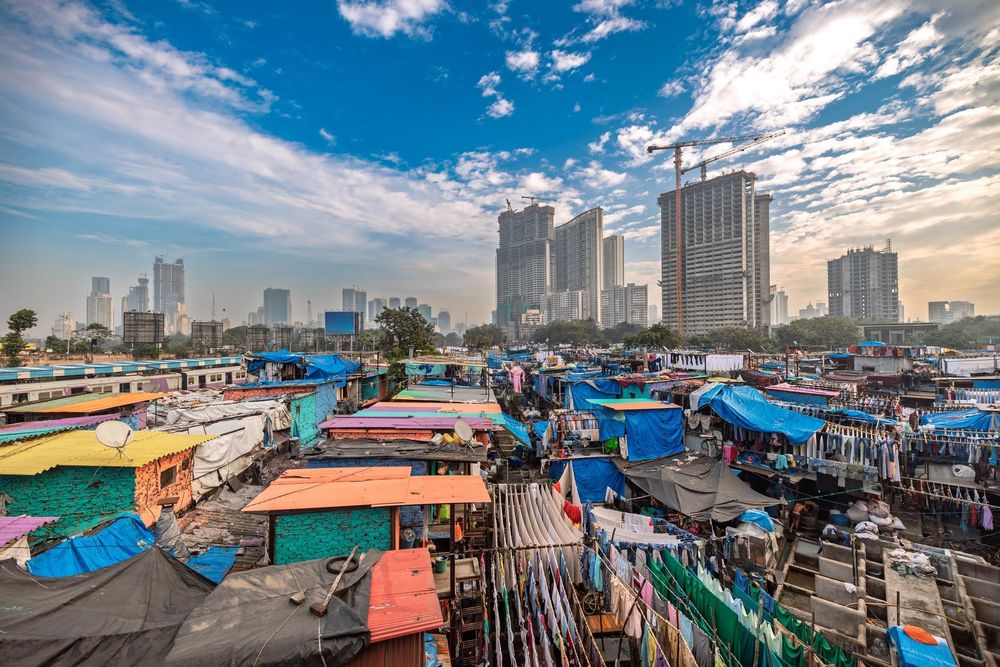
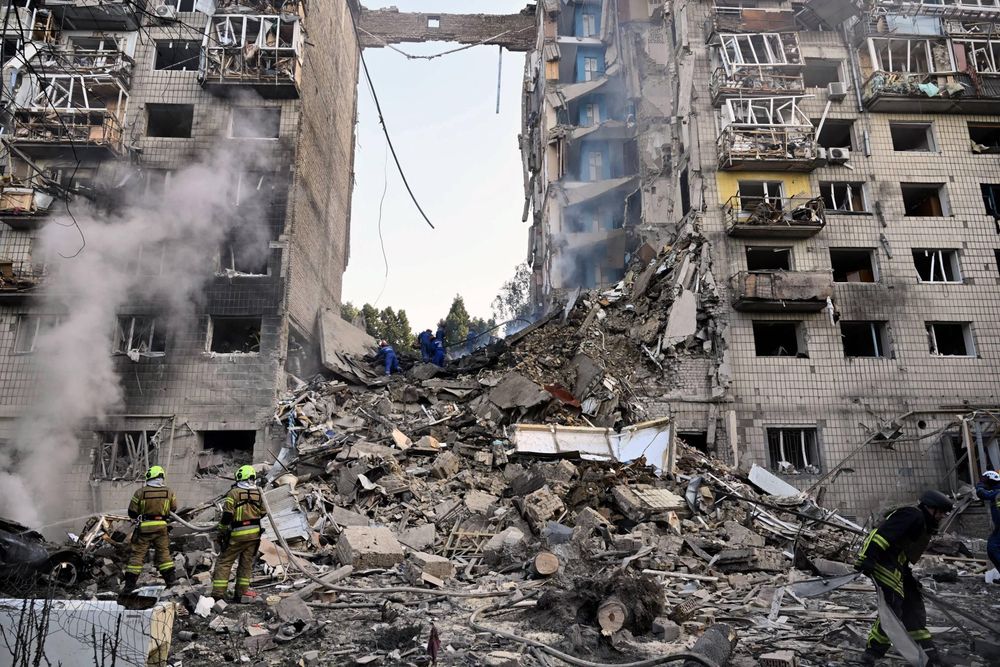
There is a sentence I have been hearing for years, and it irritates me every single time. I hear it from politicians, journalists, activists, professors, people on television and friends in ordinary conversation. It almost always comes up when something ugly, unjust or difficult to explain happens. Someone talks about a village without running water and says how unbelievable it is that people are living without basic necessities in the 21st century. A war breaks out somewhere, and a commentator wonders how such scenes are possible in the 21st century. A woman reports domestic violence, the institutions fail to protect her, and someone expresses outrage that something like this can still happen in the 21st century.
It is always the same construction. As though the century we live in were some international agreement in which we had pledged never again to be violent, poor, dishonest or stupid.
I understand the emotion behind such a sentence. Someone sees an injustice and wants to emphasise just how unacceptable it is. Sometimes they want to shame an institution that has failed to do its job, sometimes to express solidarity with people who are suffering, and sometimes they simply cannot believe that something so brutal can happen in a society that considers itself civilised.
But what increasingly interests me is what lies behind that astonishment. Why do we expect so much from a number? Why does it seem to us that merely existing in 2026 should provide some sort of guarantee of human dignity? Where does the conviction come from that violence, discrimination or hunger are somehow less natural to our time than to an earlier one?
If war is terrible, it was terrible in the 16th century too. If living without water is humiliating, it was humiliating a hundred years ago as well. If someone experiences violence today because they belong to a particular national, religious or sexual minority, the problem is the violence and the society that enables it. The fact that it is now the 21st century explains neither the cause nor the responsibility.
What is even stranger is that we are capable of saying, at the same time, that this is the most advanced period in human history and that humanity has never been worse. We take pride in technology, science, medicine and rights that previous generations did not enjoy, and then spend our days repeating that people have lost their morals, that societies have collapsed and that everything used to be more normal.
Between these two beliefs lies a rather important problem: we often base our idea of progress on the time that has passed rather than on the changes that have actually taken place.
The idea that history naturally moves forward is much older than our phones, social media and contemporary political speeches. It is deeply connected to the European Enlightenment and the development of modern thought. Philosophers began to imagine human history as a process in which reason, knowledge and freedom gradually displace ignorance, superstition and arbitrary power. For Hegel, history had an internal logic involving the development of freedom. For other thinkers, progress was not necessarily guaranteed, but they believed that human beings could create a better world through reason and institutions. The distinction between possible and inevitable progress remains an important question in the philosophy of history today.
Such faith did not emerge without reason. Industrialisation and the development of medicine, education, science and political institutions transformed human life. For an enormous number of people, living conditions today are objectively better than those their ancestors experienced. Diseases that once wiped out entire families can now be prevented. In many societies, women have won rights that were unimaginable for generations. Workers gained legal protections, shorter working hours and mechanisms for collective organisation. Human rights became part of the international legal order.
But none of those changes arrived simply because a new century began. Workers had to organise, women had to fight for political rights, and institutions had to invest money, knowledge and labour to make medical advances available to the population. Many of these processes lasted for decades and encountered serious resistance.
When we say today that something should not be happening in the 21st century, we often unconsciously skip precisely that part of history. In our imagination, the past becomes a collection of problems that time was supposed to solve. But time has never solved a single problem without people doing something about it.
There is no reason to believe that society in 2050 will automatically be more just than society in 2026. It may be wealthier and more technologically advanced while also being far more authoritarian. It may possess more sophisticated medical equipment while making it inaccessible to most of the population. It may have perfect data-collection systems and very poor mechanisms for protecting privacy.
Even scientific progress does not determine in advance how its achievements will be used. The same technological capability that enables more precise medical procedures can enable more precise military strikes. Digital infrastructure can make it easier for citizens to access information, but also easier for states to monitor their populations. The development of artificial intelligence can advance scientific research while opening new possibilities for manipulation, discrimination and the concentration of power.
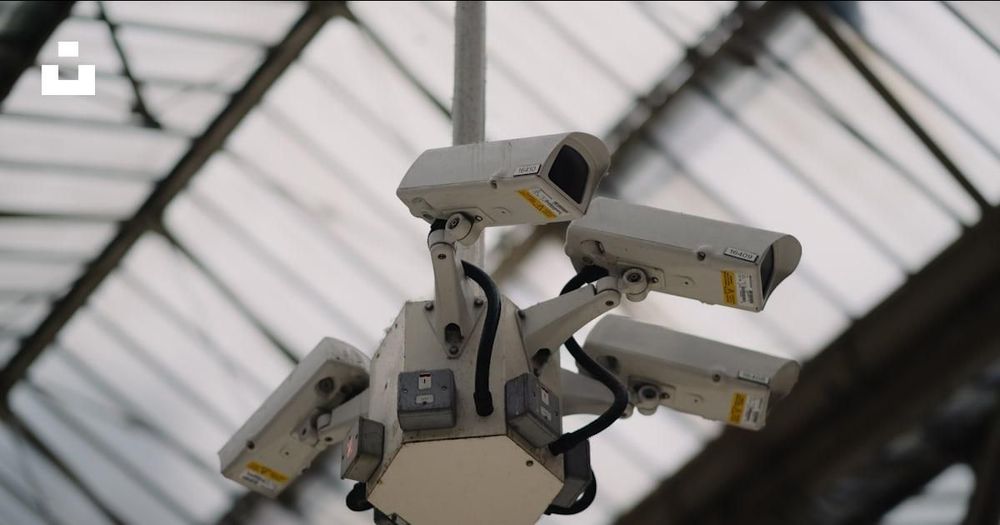
This brings us to a particularly uncomfortable fact: modern violence often uses the most advanced technology.
In his book Modernity and the Holocaust, sociologist Zygmunt Bauman offered one of the more serious critiques of the idea that modernity automatically means moral superiority. His analysis of the Holocaust shows how modern bureaucracy, organisation, administrative rationality and technical capabilities could become part of the systematic destruction of human beings. Violence did not have to be chaotic to be extreme. It could be organised, documented, administratively regulated and carried out through the institutions of modern society.
Bauman's analysis is important for our century as well. When we imagine violence as a remnant of some backward age, we risk overlooking violence produced by contemporary institutions. Organised displacement, mass surveillance, forced labour, the bureaucratic denial of rights and technologically advanced systems of warfare can all be thoroughly modern phenomena. None of them requires a return to the past.
According to a joint estimate by the International Labour Organization, the International Organization for Migration and Walk Free, approximately 50 million people were living in conditions classified by these organisations as modern slavery in 2021, including forced labour and forced marriage. More than half of forced labour was estimated to take place in upper-middle-income or high-income countries. These are estimates for 2021, published the following year, and should not be presented as a current count of victims. Nevertheless, they tell us enough: economic development and modern institutions do not automatically eliminate the possibility of extreme exploitation.
That is why the expression “how is it possible for this to happen in the 21st century?” sometimes conceals a much more important question. How is it possible that societies possessing knowledge, capital, sophisticated institutions and enormous technological capabilities continue to produce or tolerate such conditions?
The answer can no longer be found in the calendar. It must be sought in the distribution of power.
There is, however, also a psychological dimension to this linguistic habit. People need to experience the world they live in as at least somewhat understandable, predictable and orderly. Over time, each of us builds a particular picture of society, of what people are like, what we can expect from institutions and how far humanity has come.
When something happens that does not fit that picture, discomfort arises. It does not have to be a major psychological crisis. Sometimes simply seeing a news report that challenges an assumption we did not even realise we held is enough.
If I believe I live in a civilised society and then read that a woman has been murdered after repeatedly reporting violence, I am confronted with a problem that goes beyond the event itself. I must also accept the possibility that institutions I believed would provide protection do not actually function in the way I imagined.
One way of dealing with this discomfort is to declare the event an exception. We describe something as unbelievable, unimaginable or incomprehensible for our time.
Such a reaction can be understood through psychological theories about the need for a consistent picture of the world and the ways people process information that conflicts with their existing beliefs. But it would be an exaggeration to claim that everyone who mentions the 21st century is trying to suppress an uncomfortable truth. Sometimes it is merely a conventional expression of astonishment. What is interesting is what this habit reveals when we examine it as a social pattern.
Declaring injustice a historical exception allows us to preserve an optimistic picture of the present. If something brutal belongs to the past, its appearance today seems like a malfunction in an otherwise decent system. It is much harder to accept that certain forms of violence and inequality are regular products of a system we regard as normal.
For example, when people in the Balkans speak about corruption as something that “does not belong in the 21st century”, the sentence contains an assumption that modern public administration should, by its very nature, be honest. But corruption has its own political, economic and institutional conditions. It can operate alongside digitalised public procurement, electronic registers and modern management systems. Modernising procedures does not, in itself, guarantee the accountability of decision-makers.
A similar contradiction exists in our relationship with the past. On the one hand, we constantly say that the world has progressed, while on the other, almost every generation claims that people used to be more moral. Older generations were supposedly more honest, families more stable, children better behaved, neighbours closer and social relationships more sincere.
Psychologists Adam Mastroianni and Daniel Gilbert examined precisely this belief in a study published in Nature in 2023. Using data covering more than 12 million respondents from at least 60 countries, they demonstrated how widespread the belief in declining societal morality is. At the same time, they found no corresponding long-term decline in how people assess the morality of their contemporaries. The authors explain this discrepancy, among other things, through the way we remember the past and selectively pay attention to negative information. This, of course, does not prove that moral decline exists in no country or area, but it seriously challenges our tendency to assume it everywhere.
An unusual picture emerges. We believe our civilisation has reached its highest level of development while simultaneously mourning the morality of previous generations. The past serves both as evidence of how far we have progressed and as evidence of how far we have fallen. We use it according to our needs.
And this brings us to Jacques Lacan.
Lacan did not write about the phrase “in the 21st century”, and it would not be serious to attribute to him an interpretation he never offered. But his theory provides an interesting way of thinking about why the idea of a particular historical moment in which things simply must be better matters so much to society.
One of the central concepts in Lacanian psychoanalysis is the big Other (grand Autre). It is not an especially simple concept, but it can be understood as the symbolic order of language, rules, social expectations and authority that precedes the individual and within which the individual learns to understand themselves and the world. The big Other can also appear through the image of some anonymous authority, such as the State, History, Society or Science, to which we attribute special knowledge or the ability to guarantee the meaning of the social order.
Consider how often we appeal to such authorities.
“The state should not allow this.”
“Society should have made progress by now.”
“Surely history has taught us something.”
“Things like this are no longer done in the civilised world.”
And then: “In the 21st century? Really?”
Through Lacan's theoretical framework, we can read the 21st century as a kind of imagined social authority. We attribute values and standards to it, almost as though a historical period were capable of guaranteeing a particular level of human behaviour. When reality fails to meet that expectation, our reaction resembles disappointment in a promise that nobody actually made to us.
In this interpretation, the 21st century becomes a symbolic place where we imagine reason, democracy and progress should already have been realised. It carries an image of the society we have supposedly become, even when everyday experience shows that this image has serious cracks.
And Lacan's thought is particularly interesting precisely because it questions whether any such authority can provide an ultimate guarantee.
The big Other does not represent a perfectly ordered whole that knows everything and can do everything. The symbolic order has its inconsistencies, gaps and limitations. No social structure can completely remove uncertainty from human life.
If we apply this idea to our relationship with history, we arrive at a rather uncomfortable possibility: perhaps we expect modernity itself to guarantee moral order because we find it difficult to accept that no such guarantee exists.
We want to believe that the world has learned the lessons of the past. We want the Holocaust, colonial violence, wars, political persecution and discrimination to belong to a time that is behind us. That desire is understandable. But desire does not produce a law of history.
The fact that a crime has previously been documented, condemned and included in educational programmes does not mean that the social conditions enabling similar crimes have disappeared.
It is important not to go to the other extreme here. Lacan's theory does not tell us that human progress does not exist, nor does it imply that institutions are meaningless. Its value for this subject lies in helping us recognise how easily we construct a fantasy of an orderly world and then express surprise when that world fails to meet the expectations we ourselves have placed upon it.
A similar problem can be examined from the perspective of the history of ideas. Historian Reinhart Koselleck described modernity through the growing distance between the experience of the past and expectations for the future. The development of modern society brought with it the idea that the future could be radically different from anything previous generations had known. People began to expect changes their ancestors could not even have imagined.
A tension develops between experience and expectation.
If the future is imagined as continuous improvement, every failure in the present feels like a deviation from a promised direction. That is why we are so surprised when today's world resembles yesterday's. We did not expect repetition. We expected to move beyond it.
French historian François Hartog later wrote about presentism, a way of experiencing time in which the present becomes the dominant framework through which we understand the past and the future. What is particularly interesting in his work is that modern human beings no longer necessarily experience the future as a certain promise of progress. It may instead become a source of anxiety, while the present occupies an ever larger space in social consciousness.
This describes our contradiction rather well. We still use the language of progress, but we are no longer sure we believe in it. We say it is unbelievable that the world still has wars while remaining almost constantly worried about the possibility of new ones. We expect technology to improve our lives, but fear what it might do to our work, privacy and relationships. We believe in the future when we want to criticise the present, and fear it when we try to imagine what lies ahead.
That is why the “21st century” is not merely a designation of time. In our everyday language, it has also become a moral category, a kind of judgement about what should be permitted, normal and acceptable.
Politicians have recognised this possibility very well.
The statement “such things are unacceptable in the 21st century” allows a politician to sound decisive and modern even when they say very little about the actual problem. It very easily creates a distinction between us, supposedly progressive and civilised, and them, who behave as though they belong to the past.
A political opponent is presented not simply as someone with the wrong policies, but as someone who has fallen behind history.
The same happens when a particular practice is described as “medieval”. In political language, this is almost always an insult. Few people are interested in what the Middle Ages were actually like, which institutions existed then or how diverse the historical experiences of different societies were. The expression simply means that something is primitive, backward or unacceptable.
In this way, entire centuries become instruments for morally ranking people.
But is a society that uses a modern system of mass surveillance freer than a society that could not even have imagined such technology? Is a political decision made in 2026 inherently more progressive than one made in 1976? Does someone become more civilised simply because they live in a city filled with modern skyscrapers?
Of course not.
And yet our political language often works exactly that way.
An even more serious problem arises when we use the expression “21st century” to describe poorer countries and communities. Then our astonishment can easily acquire a sense of civilisational superiority.
Imagine a European journalist visiting an African country, photographing a neighbourhood without sewerage and writing that it is unbelievable that people are still living in such conditions in the 21st century.
The journalist's intentions may be entirely well-meaning. They want to expose an injustice. But the way they describe it suggests that the people living in that neighbourhood belong to an earlier historical stage, while the society from which the journalist comes represents the present.
This is an old idea of modernisation in which different societies are imagined as travellers along the same historical path, only with different degrees of delay. Such comparisons easily overlook colonial history, unequal access to resources, wars, international economic relations, public policies and the concrete causes of poverty.
People without water are not living in the past. They are living at the same time as us. Their living conditions form part of the same global economy and the same international relations to which the wealthiest societies belong.
According to a joint report by the World Health Organization and UNICEF published in 2025, approximately 2.1 billion people lacked access to safely managed drinking-water services in 2024. At the same time, almost one billion people gained access to such services between 2015 and 2024.

Both figures matter.
The first shows how large the problem is. The second shows that progress exists and can be measured.
But neither tells us that people without water are trapped in some previous century. Their situation has concrete infrastructural, economic and political causes. Likewise, the improvement did not arrive simply because nine years passed. It required investment, organisation, technology and decisions.
This is where I would nevertheless preserve part of the meaning of the phrase that irritates me so much.
There are situations in which invoking the 21st century can serve an entirely legitimate purpose. When we say it is unacceptable for someone today to die of a disease for which an effective and accessible treatment exists, we are pointing to the gap between our capabilities and people's actual living conditions.
Humanity now possesses knowledge that did not exist two hundred years ago. Certain forms of suffering can be prevented more easily than before. In that sense, invoking the modern age can emphasise that we no longer have an excuse we might once have had.
But that is not enough for serious criticism.
If a hospital lacks necessary equipment, we need to establish why it is missing. If a village has no water supply, we need to examine the responsibility of local government, investments, public plans and infrastructural obstacles. If a state fails to provide effective protection to victims of violence, we need to look at the laws, their implementation and the work of the police, prosecutors and social services.
Astonishment is the initial reaction. Responsibility demands much more.
And activists, who frequently invoke the 21st century when speaking about human rights, have particularly good reason to reflect on this.
When someone says it is shameful that discrimination still exists in the 21st century, there is usually a genuine moral conviction behind the statement. But discrimination does not persist because some community has failed to reach the modern era. It persists through laws, social norms, institutional practices, economic relationships, stereotypes and the distribution of political power.
Discrimination can be thoroughly modern. Algorithmic systems can reproduce existing prejudices in employment or access to services. Political campaigns can use digital platforms to spread hostility towards particular groups. Institutions can have entire departments dedicated to equality while simultaneously making decisions that produce unequal outcomes.
That is why I would rather an activist explain how discrimination works than remind us what year it is.
After all, perhaps the most dangerous part of believing in automatic progress is the assumption that rights, once won, remain won forever.
Generations enjoying certain freedoms today can easily forget how much political work was required to make those freedoms part of the law. They can even more easily come to believe that those freedoms can no longer be lost.
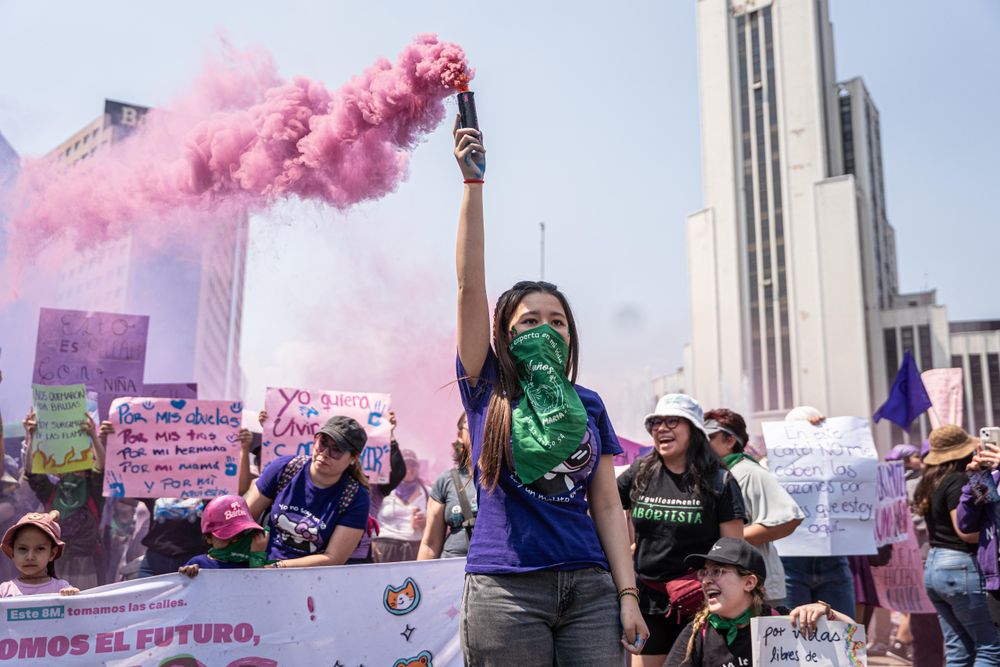
But a law can be changed. An institution can stop enforcing it. A court can change its interpretation. A political majority can adopt new restrictions. The social atmosphere can become so hostile that someone formally possesses a right they are, in reality, afraid to exercise.
Progress is not a permanent condition that we reach once and never have to maintain again.
This is particularly visible in democracy. Elections can take place regularly while institutional independence weakens. A society can have a constitution that guarantees rights while developing a political culture in which citizens are afraid to exercise them. Freedom of expression can exist on paper while journalists face pressure, threats or economic exhaustion.
Such contradictions are not errors in time. They are part of the way power can function in contemporary societies.
That is why I would like us to stop imagining history as a staircase on which each successive generation stands a little higher than the previous one. Individual societies can advance in one area and regress in another. They can improve healthcare while restricting political freedoms. They can become economically wealthier while social inequalities deepen.
The very word progress therefore demands further explanation. Progress for whom? In what respect? At what cost? Who benefits, and who is left out?
From the perspective of someone gaining access to clean water for the first time, progress might mean building a water supply system. For a woman whose state has finally provided legal protection, progress might mean a law that is actually enforced. For a worker who can make a living from their work, progress might mean greater economic security. For a community whose land the state wants to hand over to a mining company, the latest extraction technology does not automatically represent progress.
Calling something modern is not enough to make it socially beneficial.
And perhaps that is precisely why I keep returning to that unfortunate sentence.
When I hear a politician say that something does not belong in the 21st century, I would like someone to ask what exactly their institution has done to change it.
When I hear an activist say that a particular form of discrimination is unimaginable in our time, I would like that statement to be followed immediately by an explanation of the mechanism sustaining that discrimination.
And when I hear a journalist express astonishment that someone today lives without electricity, I would like to know how that happened, who is responsible and how long people have been waiting for the problem to be resolved.
Perhaps such sentences would sound less dramatic. But we would learn something from them.
Otherwise, we risk repeating the same moral condemnation over and over while remaining satisfied with the mere fact that we have said it. We belong to an advanced century, we have recognised something unacceptable and we have publicly expressed our outrage. The sense of moral righteousness is there. The question of responsibility can wait for another conversation.
I have no problem with people expecting a better society. On the contrary, I believe such expectations are necessary. Without the possibility of imagining different relationships, different institutions and a different distribution of power, we would have little reason to change anything.
My problem is that we too often transfer that expectation onto history, as though history were going to do part of the work for us.
The twenty-first century is not some special moral being. It has no conscience, possesses no political will and has no obligation to protect anyone from violence. We have assigned it the role of a symbol of progress and then started behaving as though that symbol guaranteed reality.
Meanwhile, people without water remain without water. People whose rights are denied must seek protection. Victims of violence wait for institutions to respond. They cannot do much with our astonishment that all of this is happening to them right now.
And the next century will arrive regardless of what we do. The number on the calendar will change. Perhaps technology, the appearance of cities and the way we communicate will change too. But the conditions of human life will depend on political decisions, institutions, economic relations and the societies we build between now and then.
If, by 2101, we have failed to solve problems we already know we can solve today, someone will once again say in disbelief: “How is it possible that this is happening in the 22nd century?”
And the people living with the consequences of those problems will gain very little from the fact that the world has once again been surprised.
Comments