Archive
This is where the publication becomes a record: every published story stays searchable, filterable and editorially legible.
Search stories
From the archive
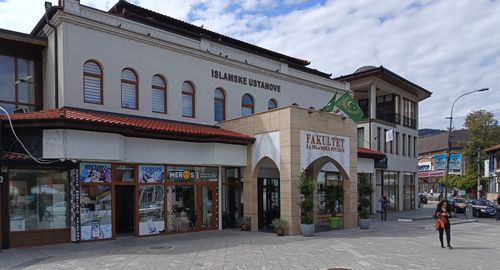
Bosniaks Between Functionality and Moral Education
Starting from Kant, the Islamic tradition and the contemporary position of Bosniaks, Emir Bihorac examines the relationship between functional institutions and the moral education of the individual, the problem of living between two models, and the question of which social direction Bosniaks, particularly in Sandžak, should choose.
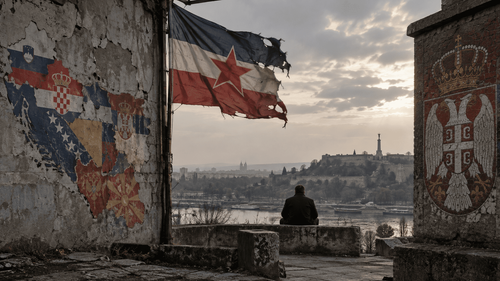
Why is Serbia a state, while the other states are former Yugoslav republics?
From the creation and collapse of Yugoslavia to succession, political memory and relations with neighbouring states, Emir Bihorac examines why Serbia is still often perceived as “the state”, while the others are reduced to “former Yugoslav republics”.
Results: 3
Bosniaks Between Functionality and Moral Education
Starting from Kant, the Islamic tradition and the contemporary position of Bosniaks, Emir Bihorac examines the relationship between functional institutions and the moral education of the individual, the problem of living between two models, and the question of which social direction Bosniaks, particularly in Sandžak, should choose.
Why is Serbia a state, while the other states are former Yugoslav republics?
From the creation and collapse of Yugoslavia to succession, political memory and relations with neighbouring states, Emir Bihorac examines why Serbia is still often perceived as “the state”, while the others are reduced to “former Yugoslav republics”.
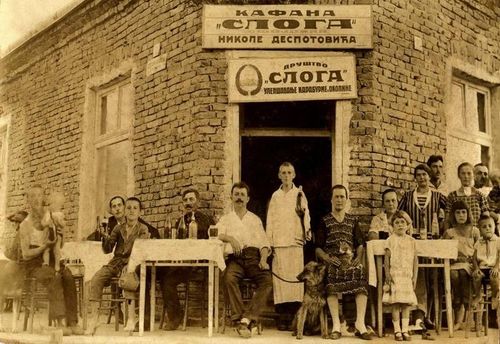
The Kafana as the Balkans’ Public Living Room
For centuries, politics, work, music, gossip, leisure and everyday tasks now handled by entire institutions have intersected around the kafana table. The kafana was one of the few places where society could be seen with little protocol.